
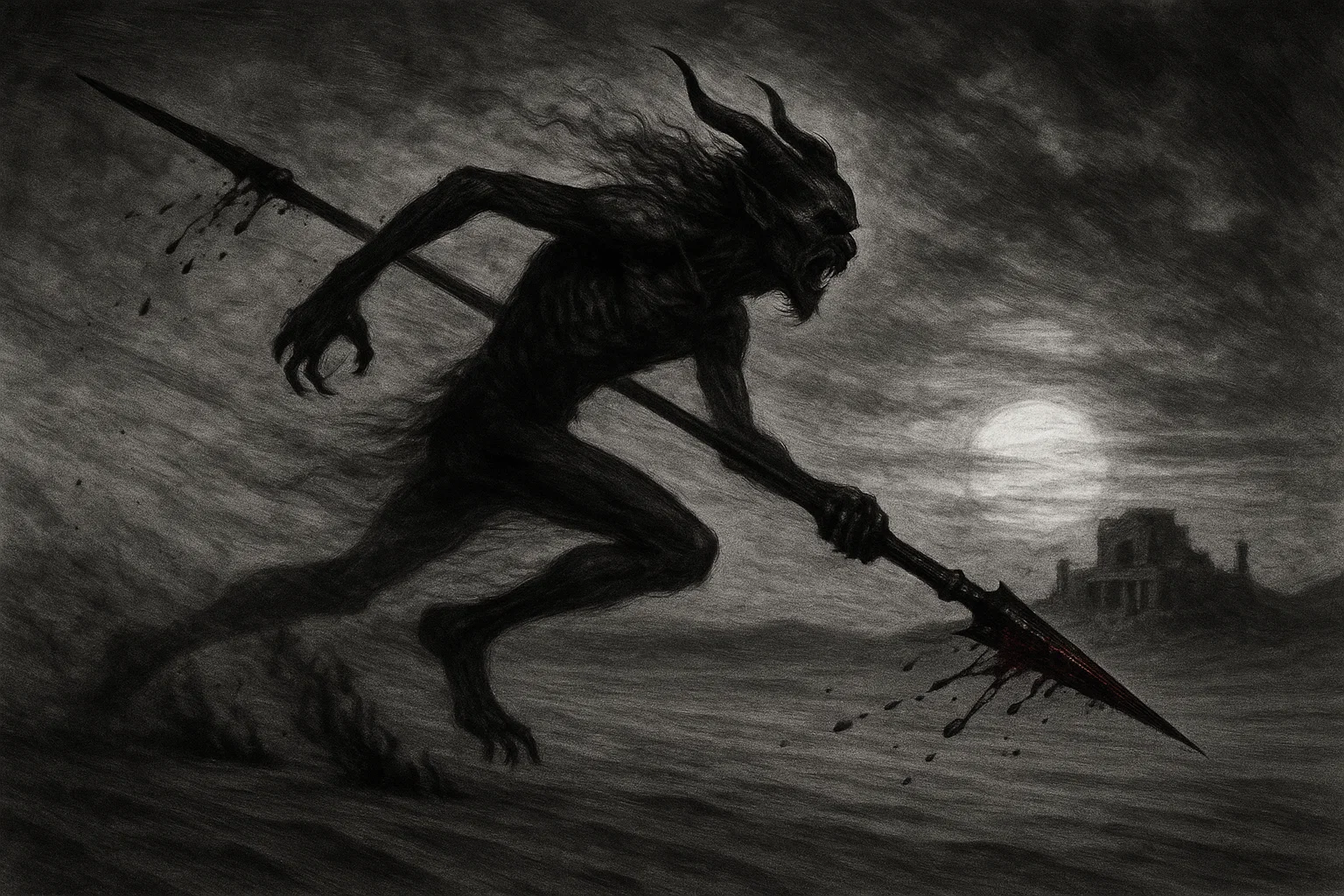
Aeshma is a major demonic figure in Zoroastrianism, the ancient religion of Iran. As one of the Daevas (demons), Aeshma represents the destructive principle of wrath, violence, and fury. The demon is an adversary of truth, order, and peace, actively opposing the benevolent forces led by the supreme deity, Ahura Mazda.
Its dark influence is characterized by inciting rage, aggression, and bloodshed among both humans and cattle. The entity’s name is directly linked to the concept it embodies, making it one of the most prominent personifications of evil in Zoroastrianism.
Table of Contents
Overview
| Attribute | Details |
| Primary Name | Aeshma |
| Other Names | Aesma, Aēšma, Aeshma-daeva, Aesma-deva, Aēšm |
| Titles | Daeva of Wrath, Demon of Fury, Lord of Violence, Wounder with the Bloody Spear, Wrathful One, Of the Bloody Mace, Assailant of the Dead |
| Gender | Male |
| Alignment | Pure Evil |
| Role | Inciter of wrath and rage, instigator of violence and bloodshed, agent of destruction |
| Rank | Chief Daeva, one of the seven arch-demons (Kamazda) opposing the Amesha Spentas |
| Hierarchy | Superior: Angra Mainyu (Ahriman); Subordinate: Lesser daevas and drūjes (demons and female demons) |
| Legions / Followers | Unknown number of lesser daevas |
| Appearance | A fierce figure, often described as possessing a bloody spear or mace, swift, and intoxicating |
| Powers & Abilities | Induces extreme rage and violence, causes frenzy, drives men to brutal acts, possesses the ability to travel swiftly, assails the souls of the dead |
| Associated Figures | Angra Mainyu (Ahriman), Azi Dahaka, Akoman, Indar, Saurva, Naonhaithya, Taromaiti, Zairik, Xšaθra Vairya, Vohu Manah, Amesha Spentas, Haoma, Sraosha, Mithra, Asto Vidatu, Āz, Saoshyant (Astvat-ereta) |
| Weaknesses | The ritual prayer of the righteous (e.g., the Yaṯā Ahū Vairyō), the mace/weapon of Sraosha, the consumption of Haoma |
| Opposing Forces | Sraosha (Yazata of Obedience and Conscience), Haoma (Divine Plant/Deity associated with purity and health), Ahura Mazda, Amesha Spentas, Mithra, Saoshyant (Astvat-ereta) |
| Pantheon | Zoroastrian |
| Region of Origin | Ancient Iran (Persia) |
| First Known Appearance | Circa 1000 BCE in the Avesta (specifically the Gāthās and later Young Avesta) |
| Primary Sources | Avesta (Gāthās, Videvdad, Yashts), Bundahishn, Zand-i Vahman Yasn |
Description
Aeshma is one of the most powerful entities in the Zoroastrian demonology, known specifically as the Daeva of Wrath. The demon is a direct creation and agent of Angra Mainyu (Ahriman), the Destructive Spirit, whose sole purpose is to oppose Asha (Truth/Order) and the benevolent creations of Ahura Mazda, the Wise Lord.
Aeshma’s role is to maliciously incite fury, leading to physical violence, conflict, and destruction. This demon is the personification of all forms of unwarranted and destructive aggression, driving humans to acts of brutality against each other and against the world’s natural order.
The entity is central to the cosmic battle between good and evil, representing the uncontrollable, savage impulse that shatters peace and righteousness.
Appearance
Aeshma is typically depicted in textual sources with a few distinct, terrifying attributes that focus on its nature as a demon of violence and speed. The most prominent feature is its bloody spear (or xšviwi.drū), which the demon carries. The spear symbolizes its eagerness to wound and spill blood.
Aeshma is described as exceptionally swift (xšviwi), allowing it to travel quickly across the world to sow discord. Another important characteristic is its association with intoxication (or xraoždā), which may be linked to a maddening or frenzied aspect of its wrath.
While specific physical details such as hair, eyes, or skin are often left vague in primary sources, the overall image is of a fearsome, rapidly moving demonic entity that wants to inflict physical harm and is driven by a bloodlust that is both self-inflicted and contagious.
The Full Solomonic Trilogy of Power Awaits. Limited-Time: Up to 67% OFF!
The ultimate Solomonic arsenal — Greater Key (Clavicula Salomonis), Lesser Key (Lemegeton), and the ancient Testament: demon binding, angelic invocation, planetary magick, and the original spirit commands of King Solomon: Greater Key ● Lesser Key ● Testament of Solomon ● 72 Spirits ● Pentacles & Circles
History
Origins in the Gāthās
The earliest mention of Aeshma appears in the Gāthās, the oldest part of the Avesta and the hymns attributed to the prophet Zoroaster (Zarathustra), dating to approximately the 2nd millennium BCE.
In these texts, the entity is referred to as aēšma, primarily as an abstract noun meaning “wrath” or “fury”. While not yet fully personified as a distinct demonic figure, the term already signifies a malevolent force that opposes righteousness (Asha).
Zoroaster’s philosophy laid the foundation for the opposition between the virtuous choice (Vohu Manah, Good Thought) and the destructive path of wrath.
Expansion in the Young Avesta
In the later texts of the Young Avesta (written or compiled centuries after the Gāthās), aēšma fully evolves into the distinct, personified demon Aeshma-daeva. In these texts, the demon is the main perpetrator of destructive violence, placed directly in opposition to the benevolent deity Sraosha (Yazata of Obedience, Conscience, and Hearing the Faith).
This conflict is extensively detailed in texts such as the Vendidad and the Yashts. Aeshma is depicted as actively causing havoc, driving people to rage, and encouraging warfare, slaughter, and all forms of aggressive evil.
The Role in Earthly Conflict
The Vendidad describes Aeshma’s direct involvement in corrupting the world. The text warns against the daeva’s influence, noting that Aeshma enters the world through violence, drunkenness, and the failure of humans to maintain order and purity.
A key thematic development is the battle between Aeshma and Sraosha. Sraosha, equipped with a powerful mace, is Aeshma’s primary celestial foe, tirelessly guarding the world against the forces of wrath and ensuring the proper observance of rituals and ethical conduct.
What the Vatican’s Chief Exorcist Reveals Awaits. Limited-Time: Up to 30% OFF!
From the case files of Rome’s legendary exorcist — real stories of possession, the hidden antics of fallen angels, tactics of the demonic, and how Satan loses every time: True Possessions ● Demonic Tricks ● Signs of Attack ● Deliverance Secrets ● Amorth’s Warnings
Later Zoroastrian and Pahlavi Texts
In Pahlavi-era texts, such as the Bundahishn, Aeshma is firmly placed within the formal hierarchy of evil. Aeshma is ranked among the seven Kamazda (arch-demons), who serve as the demonic counterparts to the seven Amesha Spentas (Holy Immortals).
In this cosmic setup, Aeshma is often paired specifically with Xšaθra Vairya (Desirable Dominion or Rule), the Amesha Spenta associated with power and kingship, potentially signifying the corruption of earthly authority through tyrannical and wrathful rule.
What’s more, Aeshma is connected to the ritual use of the sacred plant Haoma. A pure, divine substance, Haoma is described as a force capable of banishing Aeshma and counteracting the demon’s maddening influence.
The Final Defeat
In the eschatological framework of Zoroastrianism, Aeshma plays a specific and terrifying role in the fate of the soul. Along with the demon Asto Vidatu (the Demon of Death), Aeshma lies in wait to assail the souls of the deceased as they approach the Činvat Bridge (the Bridge of Separation) for judgment.
Aeshma’s wrath seeks to terrify and overcome the soul, condemning it to the House of Lies. This function extends the daemon’s role from terrestrial violence to spiritual peril.
In the final conflict of the world, the Frashokereti (the final renovation), Aeshma’s end is prophesied. Though a powerful force of destruction, the demon will eventually be vanquished by the Saoshyant (the final savior figure, Astvat-ereta), leading to the eradication of all wrath from the renewed world.
Plus, a non-standard Pahlavi tradition details a unique fate for Aeshma before the final renovation, where the daemon of wrath is eventually consumed and swallowed by Āz (the Daeva of Avarice/Concupiscence), suggesting that insatiable greed is the greater and all-consuming evil.
Genealogy
| Attribute | Details |
| Parents | Angra Mainyu (Ahriman) |
| Siblings | Akoman, Indar, Saurva, Naonhaithya, Taromaiti, Zairik (all Daevas and children of Angra Mainyu) |
| Other Relationships | Serves Angra Mainyu; Opposed by Sraosha, Haoma, and the Amesha Spentas |
The Ultimate Encyclopedia of Demons. Limited-Time: Up to 25% OFF!
The definitive A–Z guide to demonology — over 400 entries on demons, possession cases, exorcisms, global traditions, and dark entities throughout history, illustrated with rare photos: Ancient Lore ● Fallen Angels ● Possession & Exorcism ● Worldwide Demons ● Modern Cases
Sources
| Source | Quote |
| Avesta, Yasna 57.10 (Srosh Yasht Hadokht) | ‘Which smites Aesma, the possessor of the bloody spear, when he rushes upon the world to wound it, and makes him unable to destroy the corporeal world of Asha (Truth/Order).’ |
| Avesta, Videvdad (Vendidad) 10.2 | ‘With this word (the Ahuna Vairya prayer) I drive away Aesma, the fiend of the wounding spear.’ |
| Avesta, Yasna 9.8 | ‘The third reward given to me (Haoma) was this, that Aeshma, the possessing fiend, the one with the wounding spear, rushes not against the place where there is the preparation of Haoma.’ |
| Avesta, Yasna 48.7 (Gāthās) | ‘When will the wise one, Sraosha (Obedience), come with Vohu Manah (Good Mind), and by what deeds shall the one who is angry, the fiend Aesma, be put to flight?’ |
| Bundahishn (Greater) 34.27 | ‘In opposition to Xšara Vairya (Desirable Dominion) he (Angra Mainyu) produced the Daeva Aeshma.’ |
| Bundahishn (Greater) 28.14 | ‘The fiend Aeshma is in this, that he makes them wicked and causes wrath and violence, and the demon of drunkenness and passion is of his party.’ |
| Zand-i Vahman Yasn 7.18 | ‘Aeshma-daeva will rush into the world, with blood and wounds, to slay the holy men.’ |
Powers
Aeshma is a powerful figure known for causing chaos and destruction through intense anger. Instead of using tricks or illusions, this demon focuses on unleashing a wave of furious emotions that can overwhelm anyone. Aeshma can fill people’s minds with a strong urge to fight and act aggressively, disrupting their usual thinking.
When Aeshma exerts its influence, it can lead people to commit cruel acts, violence, and even destruction without thinking clearly. This is described as a sudden rush of anger that takes over, making individuals act against their morals and better judgment.
Additionally, Aeshma can move quickly and spread its influence far and wide. It is also tied to bloodshed and battle, acting as a force behind conflict and symbolizing destructive power.
A key function extending beyond the physical world is the assault on the departed soul at the Činvat Bridge, where Aeshma attempts to terrorize and condemn the spirit.
In the larger theological narrative, Aeshma is uniquely positioned to be, in the end, devoured by the daeva Āz (Avarice/Greed), an expression of the destructive power of wrath being overcome by a greater, self-consuming evil.
Powers and Abilities Breakdown
- Inducement of Rage: Triggers irrational, overwhelming wrath and fury in humans and animals.
- Instigation of Violence: Directly incites acts of brutality, murder, and bloodshed.
- Causing Frenzy: Suppresses rational thought, replacing it with a destructive, intoxicating impulse.
- Assault on the Soul: Lays in wait to assail the souls of the dead at the judgment bridge (Činvat Bridge).
- Swift Movement: can traverse the world rapidly to spread chaos.
- Promotion of Conflict: Encourages and facilitates warfare and societal discord.
Occult correspondences
| Attribute | Details |
| Planet | Mars |
| Zodiac Sign | Aries |
| Element | Fire |
| Direction | South |
| Color | Red |
| Number | 3 |
| Metal | Iron |
| Crystal / Mineral | Bloodstone |
| Herb / Plant | Nettle, Thistle |
| Incense | Sulfur, Dragon’s Blood |
| Sacred Animal / Symbol | Spear, Wild Boar |
Tags:
Explore More Demons…
Baykok (Ojibwe Flying Skeleton Demon)
March 2, 2026
Baku (Japanese dream-eater demon)
February 13, 2026
December 1, 2025
January 7, 2026
December 2, 2025
February 2, 2026