
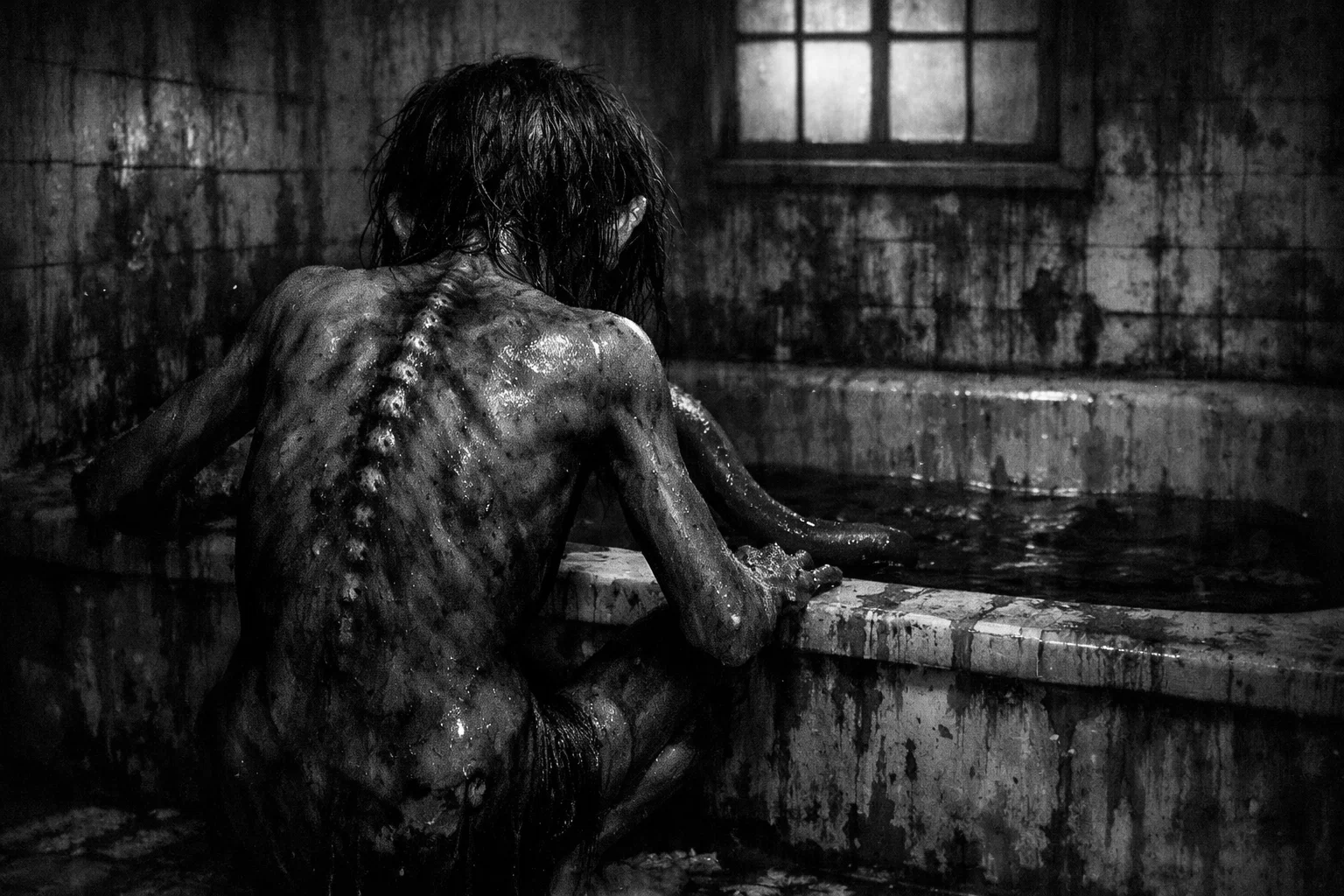
The Akaname is a lesser spirit in Japanese Shinto-Buddhist folklore. It is a type of yokai whose main role is to eat filth and grime in neglected homes. Although it is not as powerful as the major oni or deities, it is an important household spirit. People have long seen its presence as a sign of poor hygiene and a lack of discipline in the home.
An often-told folktale recounts the story of a small village where a family suffered misfortune and illness due to their neglected living conditions. Every night, the Akaname would creep into their home, its long tongue noisily slurping up the filth in their bathhouse.
Despite its efforts to clean, the spirit’s presence left an unsettling atmosphere that drained the household’s vitality. Realizing the source of their problems, the family began to maintain their cleanliness, banishing the Akaname and restoring harmony to their home.
Table of Contents
Overview
| Attribute | Details |
| Primary Name | Akaname |
| Other Names | Filth Licker, Red Lick, Scum Licker |
| Titles | Licker of Filth, Master of the Bathhouse, Scum Eater |
| Gender | Male (often depicted as a small boy) |
| Alignment | Ambivalent/Mischievous |
| Role | Consumer of human waste, Licker of bathtub grime, Punisher of the unhygienic |
| Rank | Minor Yokai |
| Hierarchy | None / Independent spirit |
| Legions / Followers | None |
| Appearance | A small, goblin-like humanoid with red-tinted skin and an extremely long tongue. |
| Powers & Abilities | Filth consumption, stealth, disease transmission via saliva, wall-crawling |
| Associated Figures | Toriyama Sekien, Katsushika Hokusai, Mizuki Shigeru, Tenjo-name, Yanagi-onna, Azukiarai, Gashadokuro, Kappa, Kitsune, Tanuki, Tengu, Nurarihyon, Yuki-onna, Rokurokubi, Kamaitachi |
| Weaknesses | Cleanliness, soap, physical scrubbing of surfaces, salt, daylight |
| Opposing Forces | Diligent housekeepers, Shinto priests (via purification rituals) |
| Pantheon | Japanese Shinto-Buddhist |
| Region of Origin | Japan |
| First Known Appearance | 1776, Gazu Hyakki Yagyō (The Illustrated Night Parade of a Hundred Demons) |
| Primary Sources | Gazu Hyakki Yagyō by Toriyama Sekien, Konjaku Hyakki Shūi |
Description
The Akaname is a yokai that represents the idea of ‘aka,’ which means the grime, scales, or waste that builds up in baths and washrooms.
‘Aka’ is important in both language and culture in Japan. In language, it means filth or grime and comes from the kanji for red, linking it to something you can easily see. Culturally, ‘aka’ stands for more than just dirt; it also means neglect and a loss of ritual purity, showing when people stop caring for their homes. This idea helps explain why the Akaname reminds people to keep their living spaces clean and orderly.
In Shinto belief, being clean is closely linked to being pure, while filth attracts spiritual problems. The Akaname shows the line between clean homes and the spiritual decay that happens when people ignore cleanliness. It is not an evil being, but a sign of neglect and the problems that come from not caring for your home.
Appearance
The Akaname usually appears as a small, child-sized creature with a thin or, at times, bloated body. Its skin is often shown as mottled red or pink, but some old stories describe it as having dark, oily skin. Its most noticeable feature is a very long, flexible tongue that can stretch several feet.
The Akaname’s tongue is usually covered in sticky, corrosive saliva that helps it dissolve grime. Its head often has thin, messy, or tangled hair, and its eyes are big and bulging. Many drawings show it with just one toe or a claw-like foot on each limb, which helps it grip slippery tiles and wood in damp bathrooms.
History
Manifestation of Grime
The Akaname did not come from the heavens or from a place of fire. Instead, it formed from the dampness and neglect found in people’s homes. During the early Edo period, as public bathhouses and private bathing became more common in Japan, hygiene concerns started to take shape in people’s minds.
The Akaname is said to have come from the shadows of the bathroom, or ‘furoba.’ Stories about it were first told to children to make sure they kept the bathwater clean and scrubbed the tubs after using them. People believed that any dirt left behind would attract the red-skinned creature at night.
The Ultimate Yokai Encyclopedia. Limited-Time: Up to 28% OFF!
Over 300 entries on Japan’s most haunting spirits — yōkai, oni, kitsune, ghosts, and mythical creatures from ancient scrolls to modern legends, fully illustrated: Kappa & Tengu ● Kitsune & Tanuki ● Yūrei Ghosts ● Oni Demons ● Legendary Beasts.
The Chronicles of Toriyama Sekien
In the late 1700s, the scholar and artist Toriyama Sekien gave the most well-known historical record of the Akaname. In his book Gazu Hyakki Yagyō, he showed the creature hiding near a bathtub. Sekien often used humor and wordplay in his work, and by including the Akaname, he made it a lasting part of Japanese supernatural stories.
Besides Sekien’s work, the Akaname is found in other old texts and art. For example, it appears in the Edo period book Konjaku Gazu Zoku Hyakki by Sekien, which explores many yokai. The Akaname is also shown in scrolls and woodblock prints from that time, often highlighting its role in teaching people about cleanliness. These historical sources help show how important the Akaname is in Japanese culture.
At that time, the Akaname was more than just a scary monster; it was also used as a way to teach people about cleanliness. As cities like Edo grew and more people lived together and shared bathrooms, the idea of ‘dirty’ spirits became a real concern for public health and order.
The Midnight Licker
In the 1800s and 1900s, stories passed down by word of mouth turned the Akaname from just a picture into the main character of warning tales.
One popular story is about a lazy homeowner who would not clean the slime from his bathroom floor.
At midnight, he heard a wet, repeating ‘slap-slap’ sound from the bathroom. When he looked through the door, he saw the Akaname using its huge tongue to lick the floor clean. Even though it seemed helpful, the man soon got sick from the ‘spiritual filth’ left by the creature’s saliva.
This story shows how the Akaname changed from a harmless cleaner to a spirit that brings bad luck and illness. While it removes dirt, it leaves behind a supernatural sickness.
Modern Interpretations
After World War II, folklorists like Mizuki Shigeru helped bring the Akaname back into the spotlight. As Japan modernized and old wooden tubs were replaced by metal and plastic, the Akaname became seen as a leftover from the past. It started to appear in modern media like manga, anime, and video games, often shown as a misunderstood pest instead of a scary demon.
Even with these changes, the main story stays the same: when people let dirt and waste build up, the Akaname appears. It connects old superstitions with today’s ideas about cleanliness.
The Akaname continues to appear in various forms of pop culture, such as manga, anime, and video games, where it is often portrayed as a nuisance or humorous character. Additionally, elements of the Akaname legend can be found in some local festivals celebrating traditional yokai folklore, where it is a reminder of cultural heritage and the importance of cleanliness.
Genealogy
| Attribute | Details |
| Parents | None (Manifestation of filth) |
| Siblings | Tenjo-name (The Ceiling Licker) |
| Consorts | None |
| Offspring | None |
| Other Relationships | Occasional companion of the Tenjo-name; thematic relative of bathroom spirits like Hanako-san. |
The Akaname is its own type of yokai, but it shares the home with other spirits in Japanese folklore. For example, the Zashiki-warashi is a friendly spirit that brings good luck and protects families who keep their homes clean and peaceful.
Unlike the Akaname, which appears when people neglect their homes, the Zashiki-warashi rewards good care. This difference shows how the Akaname warns people about the problems that come from not keeping things clean.
The Rokurokubi is another yokai linked to the home. It is more frightening, often shown as a woman whose neck stretches at night. This yokai reminds people that strange things can hide in everyday life. Like the Akaname, it stands for things people ignore or hide in their homes. Together, these spirits add depth to Japanese folklore, showing that homes can be both safe and unsettling.
In the bigger picture of yokai, spirits like the Akaname act as go-betweens for human mistakes and spiritual results. They help teach cultural values by showing what happens when people ignore cleanliness. Their lasting place in Japanese folklore shows how they represent the ongoing struggle between order and mess.
The Complete Fiction of H.P. Lovecraft
Every tale of cosmic horror in one definitive collection — Cthulhu, Yog-Sothoth, ancient gods, forbidden tomes, and the madness that lies beyond the stars: Call of Cthulhu ● At the Mountains of Madness ● Shadow Over Innsmouth ● The Dunwich Horror ● Complete Mythos
Sources
| Source | Quote |
| Gazu Hyakki Yagyō (Toriyama Sekien) | The Akaname is a monster that lives in old bathhouses and dilapidated houses. It is said that when dirt and grime accumulate, this monster appears and licks it all up. |
| Wakan Sansai Zue (Terajima Ryōan) | In the bathhouses of the capital, there are spirits that emerge when the water is cold and the night is deep to consume the residue of the bathers. |
| Konjaku Hyakki Shūi | The red spirit with the long tongue finds its sustenence in the filth that men leave behind in their laziness. |
Powers
The Akaname has special biological and supernatural abilities that fit its scavenger way of life. Its main power is ‘Filth Consumption,’ using a tongue with enzymes that can break down hard minerals, mold, and skin cells. This lets it eat things other creatures cannot. Its saliva helps clean the environment but is poisonous to people; touching it or swallowing it can cause ‘Akaname-fever’ or other illnesses.
The Akaname is also very good at hiding. It can flatten its body to fit behind small buckets or inside the drainage slats of old-style bathrooms. It can crawl on walls and ceilings by using sticky stuff from its hands and feet, which helps it stay out of sight.
The Akaname does not have fighting powers, but it can spread disease and make people in a home feel uneasy. It can also sense when dirt and grime have built up, even from far away, and can appear wherever cleanliness has fallen below a certain level.
Occult correspondences
| Attribute | Details |
| Planet | Moon (associated with water and night) |
| Zodiac Sign | Cancer (the sign of the home and domesticity) |
| Element | Water / Earth (specifically damp earth/mud) |
| Direction | North-East (the Kimon or Ogre’s Gate) |
| Color | Dull Red, Brown, Moss Green |
| Number | 5 (representing the senses, specifically taste) |
| Metal | Copper (found in plumbing and bath fittings) |
| Crystal / Mineral | Sulfur, River Stone |
| Herb / Plant | Moss, Algae, Mugwort |
| Incense | Damp Earth, Sandalwood |
| Sacred Animal / Symbol | Toad / The Tongue |
Tags:
Explore More Demons…
Baku (Japanese dream-eater demon)
February 13, 2026
Anzu (Mesopotamian Storm Demon)
January 28, 2026
February 26, 2026
December 1, 2025
March 13, 2026
December 1, 2025