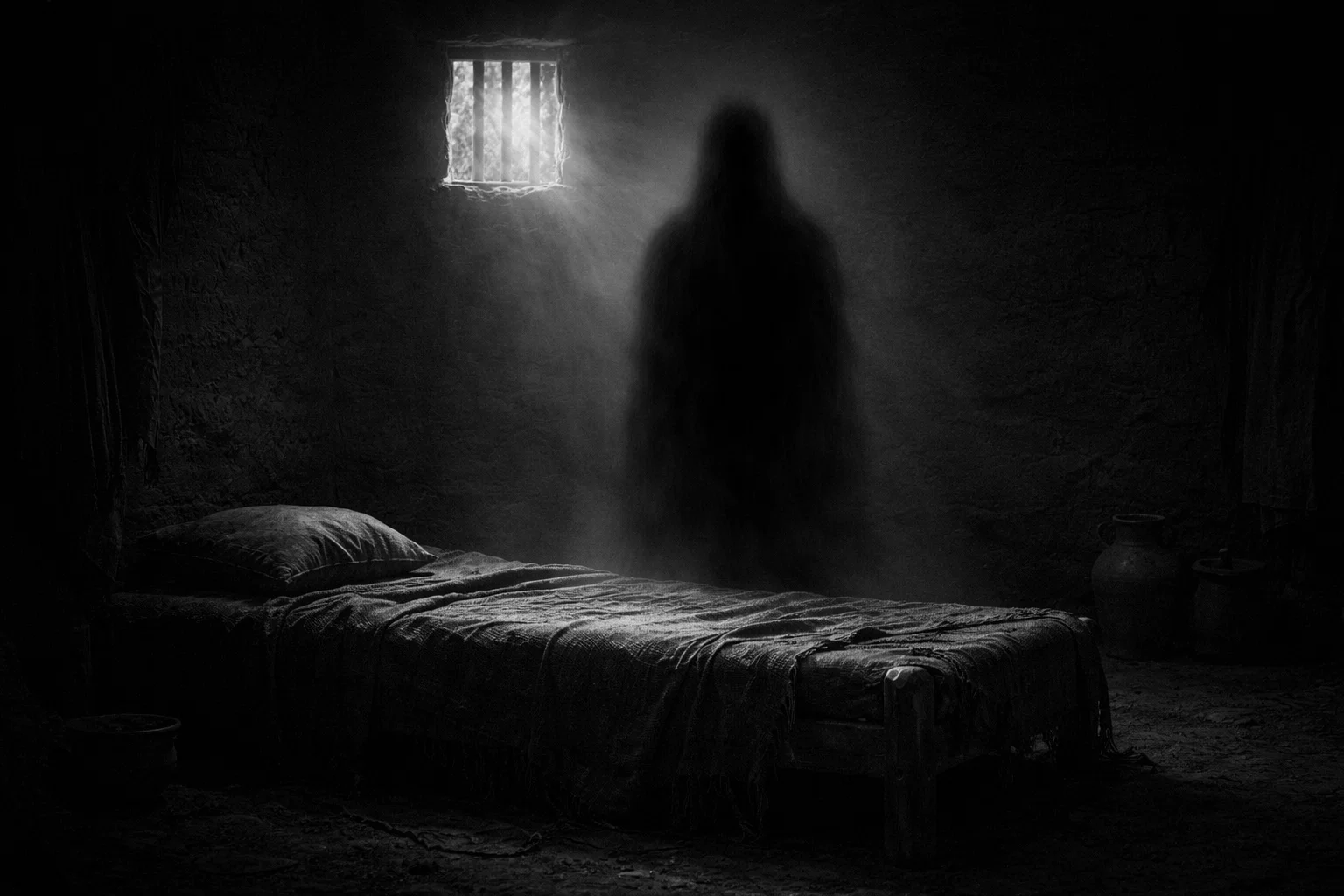

Alû is a well-known Mesopotamian night demon linked to sleep paralysis, nightmares, and physical illness. In Sumerian, Akkadian, and Babylonian traditions, Alû is seen as a formless, predatory spirit from the Utukku group. It is thought to harm people by crushing them or taking away their senses while they sleep.
Table of Contents
Overview
| Attribute | Details |
| Primary Name | Alû |
| Other Names | Allu, Alu, Alû-spirit, Gallû-Alû |
| Titles | The Crusher, The Hider, The Faceless One, The One Without Mouth, The One Without Ears, Night-Spirit, He Who Overwhelms the Sleeper |
| Gender | Genderless (often described as lacking human physical traits) |
| Alignment | Neutral Evil |
| Role | Nightmare Invader, Bringer of Sleep Paralysis, Soul-Eater, Harbinger of Madness, Inducer of Sickness |
| Rank | Member of the Utukku (Seven Evil Spirits) |
| Hierarchy | Serves the will of the Underworld (Irkalla); often grouped with Lamashtu and Pazuzu in the Mesopotamian hierarchy of malevolence. |
| Legions / Followers | None specified; typically operates as a solitary predator. |
| Appearance | Formless, faceless, often depicted as a dark envelope or an entity without limbs or features. |
| Powers & Abilities | Invisibility, weight imposition (crushing sleepers), inducing muteness, draining life force, causing insomnia, inducing coma-like states. |
| Associated Figures | Alal, Enki, Marduk, Lamashtu, Pazuzu, Lilû, Lilith, Ardat Lilî, Gallu, Rabisu, Nergal, Ereshkigal, Utu, Gula, Namtar. |
| Weaknesses | Incantations to Enki, protective amulets of Pazuzu, ritual cleansing with holy water, flour circles, cedar wood smoke. |
| Opposing Forces | Enki (Ea), Marduk (Asalluhi), Shamash (Utu), Gula (Healing Goddess). |
| Pantheon | Mesopotamian (Sumerian/Akkadian) |
| Region of Origin | Mesopotamia (Sumer/Babylon) |
| First Known Appearance | 3rd Millennium BCE; Sumerian incantation texts. |
| Primary Sources | Utukkū Lemnūtu (Evil Spirits) series, Maqlû (Burning) series, Surpu series. |
Description
Alû represents the terrifying aspects of the night and the vulnerability of the human body during sleep. Conceptually, it is the personification of “the crushing weight” experienced during sleep paralysis, a phenomenon documented in ancient medical and magical texts.
In Mesopotamian beliefs, Alû is not a fallen god but an ancient evil spirit that escaped the Underworld or was never properly buried. It brings chaos into the world of the living and threatens the “breath of life” (napištu). Alû is seen as a parasite that drains the energy and mind of its victims, sometimes leading to madness or death.
Appearance
Alû is mainly known for having no clear physical features and is often described as formless or “enveloping.” It is usually shown without a mouth, ears, or eyes, making it a silent and unseen presence.
Some stories compare Alû to a dark shadow or a leather-like covering that settles over its victim. If it takes a more solid shape, it might look like a human or a creature without limbs, but these forms are always unclear. Alû does not have a set body; instead, it appears as a heavy, oppressive force that hangs over a sleeping person, wrapping them in darkness.
History
Alû’s origins go back to early Sumerian stories from the third millennium BCE. Unlike the gods who lived in the heavens or temples, Alû was one of the “Seven Evil Spirits” (Utukkū Lemnūtu), born from the sky god Anu and the earth goddess Ki, but cast out because of their evil nature.
These spirits were called the “spawn of the Abyss.” They did not eat, drink, or show mercy. In the oldest myths, Alû was not just one being but a type of ghost that lived between the worlds of the living and the dead. People believed that those who died without proper burial or alone could become an Alû, roaming as a hungry, faceless ghost looking for someone to haunt.
The Classic Masterwork of the Black Arts. Limited-Time: Up to 42% OFF!
The legendary 1967 guide to forbidden magick — witchcraft, Satanism, demonology, alchemy, astrology, rituals, and the dark history of occult power through the ages: Black Magick ● Alchemy & Astrology ● Kabbalah ● Ritual Magic ● Satan & Demons
The Enveloping Shadow of the Desert
In Babylonian stories, Alû was always a danger to travelers and nomads. Legends say it hunted in the desert, drawn to tired people. One tale tells of a merchant traveling between Nippur and Babylon who took shelter in a ruined shrine.
While he slept, an Alû came down as a cold, suffocating darkness, not as a monster. The merchant felt its weight pressing the air from his lungs, a common theme in Mesopotamian stories about sleep paralysis.
The story says the merchant survived because he carried a piece of carnelian with a prayer to Shamash, the sun god. At dawn, the stone glowed with light and drove the shadow back into the earth.
The Silent Guest of the Bedroom
Stories about Alû in the home focused on how it could sneak in and stay. People believed it could enter through the tiniest crack or hole, like a snake or the wind. Once inside, it would attach itself to a household. One story from medical-magical texts tells of a family haunted by a “Silent Alû.”
This spirit did not break things or make noise. Instead, it sat on the head of the household every night for seven months. The stories say the victim’s eyes became sunken and his skin turned yellow because the Alû was “drinking his breath.”
The family finally called an exorcist, who used a special ritual with a “Circle of Flour” to trap the demon in a clay figure, which was then broken at a crossroads.
The Battle of the Exorcists and the Faceless
The most detailed stories about Alû are found in the Utukkū Lemnūtu series, which is both a religious text and a collection of legends. In one story, a priest of Enki met an Alû while walking in Eridu at twilight. The demon looked like a “faceless man” standing in a dark alley.
As the priest got closer, the entity turned into a thick mist and tried to enter his mouth to steal his voice. The story tells of a spiritual battle where the priest recited the “Incantation of Eridu” and called on the sacred waters of the Apsu. In the end, the Alû was driven away by the “Breath of Life” and forced to flee to the empty ruins.
The Alû in the Courts of Kings
Records from the Neo-Assyrian period show that even kings and their courts feared Alû. Chronicles mention “Alû-sickness” among officials, where the victim “cannot hear, cannot speak, and lies like a log.” In these stories, the demon was seen as a bad sign, meaning the gods had stopped protecting the king’s advisors.
Rituals were held to order the “evil Alû” back to the Underworld, to the gates of Irkalla, where the gatekeeper Neti would bind it. These stories show how Alû changed from a simple desert ghost to a powerful spirit capable of threatening the state.
Genealogy
| Attribute | Details |
| Parents | None (Primordial spirit or spawned from the Underworld) |
| Siblings | The Utukku (Udug, Gallu, Edimmu, Shedu, Lamashtu, Labasu) |
| Consorts | None |
| Offspring | None |
| Other Relationships | Often associated with the Lilû and Ardat Lilî spirits. |
The Black Book of Forbidden Secrets. Limited-Time: Up to 71% OFF!
The infamous 19th-century grimoire of dark arts — charms, talismans, spells, omens, dream interpretation, and occult rituals once hidden from the public: Black Magick ● Love Spells ● Talismans & Amulets ● Fortune-Telling ● Curses & Hexes
Sources
| Source | Quote |
| Utukkū Lemnūtu, Tablet V | The Alû-spirit, which has no mouth, the Alû-spirit, which has no ears, the Alû-spirit, which has no limbs. |
| Utukkū Lemnūtu, Tablet IV | They are the ones who overwhelm the man, they cover the man like a garment. |
| Maqlû, Tablet II | Alû, who hides in the bedroom, who slinks through the streets at night. |
| Akkadian Incantation Text | May the evil Alû fly away like a bird to the heavens. |
Powers
Alû works by physically and mentally suppressing its victims. Its main power is to create a “crushing weight,” showing up as an invisible, heavy force on a sleeping person’s chest. This causes sleep paralysis, making it hard to breathe or call for help. Alû can also “envelope” someone, cutting off their senses so they cannot see or hear, trapping them in darkness.
Alû can also cause “wasting,” slowly draining a person’s life through repeated visits at night. This leads to ongoing insomnia, deep tiredness, and sometimes confusion or madness. Unlike other demons that attack physically, Alû’s power is heavy and oppressive. It can even leave someone unable to speak after waking, as its effect stays in the throat and mind.
Incantations against Alû (Utukkū Lemnūtu)
| Source | Quote |
| Utukkū Lemnūtu, Tablet V | By Heaven be thou exorcised! By Earth be thou exorcised! Whether thou art an evil Alû that hideth in the bedroom, or an evil Alû that walketh in the street. |
| Utukkū Lemnūtu, Tablet V | The evil Alû that hath no mouth, the evil Alû that hath no ears, the evil Alû that hath no limbs, may he be exorcised by the Spirit of Heaven! |
| Utukkū Lemnūtu, Tablet III | May the evil Alû go forth! May he depart from the body of the man, the son of his god! Like the smoke that goeth up to heaven, may he be gone! |
| Utukkū Lemnūtu, Tablet XI | Incantation: The evil Alû who covereth the man like a garment, who stretcheth out his hand over the man, may he be driven out! May the command of Enki be upon him! |
| Utukkū Lemnūtu, Tablet XVI | Spirit of the Sky, remember! Spirit of the Earth, remember! May the evil Alû, who hath seized the man, be cast out into the desert! |
Occult correspondences
| Attribute | Details |
| Planet | Saturn |
| Zodiac Sign | Capricorn |
| Element | Earth (Chthonic) |
| Direction | North |
| Color | Black |
| Number | 7 |
| Metal | Lead |
| Crystal / Mineral | Hematite |
| Herb / Plant | Cedar (as a repellent) |
| Incense | Sulfur |
| Sacred Animal / Symbol | The Shroud |
Tags:
Explore More Demons…
February 12, 2026
December 1, 2025
Ahriman (Zoroastrian Principle of Evil)
December 9, 2025
Aghasura (Hindu/Krishna Demon)
December 9, 2025
January 12, 2026
December 8, 2025
