
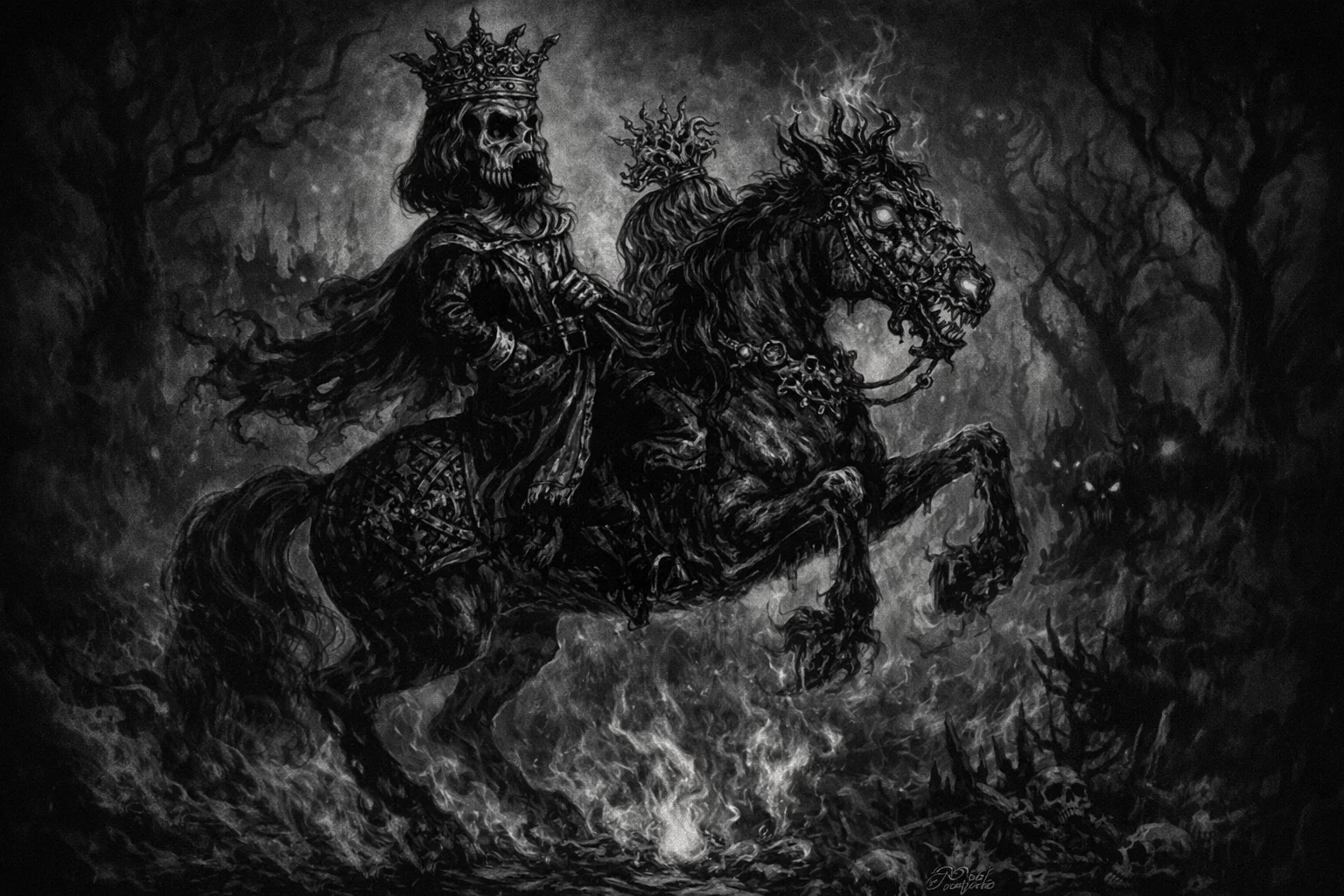

Berith is a well-known and high-ranking demon who appears in many grimoires and demonological traditions. In the Goetic system of Abrahamic demonology, he is called a Great Duke of Hell. Berith is recognized for overseeing pacts and providing knowledge about the past and future, leading a large part of the infernal host.
Table of Contents
Overview
| Attribute | Details |
| Primary Name | Berith |
| Other Names | Beal, Berithi, Bofry, Bolfry, Boltri, Ba’al Berith, Baal-Bereth, Barat |
| Titles | Great Duke of Hell, Duke of the Infernal Empire, Prince of the Seraphim, Lord of the Covenant, Scribe of Hell, Master of Ceremonies, Idol of the Shechemites |
| Gender | Male |
| Alignment | Lawful Evil |
| Role | Enforcer of Pacts, Tempter of Murder and Blasphemy, Divider of Friends, Granter of High Honors, Revealer of Hidden Truths |
| Rank | Great Duke of Hell |
| Hierarchy | Subject to the higher Infernal Kings; commands subordinate spirits within his dukedom |
| Legions / Followers | 26 Legions of Spirits |
| Appearance | A soldier dressed in red clothing, wearing a golden crown, and riding a red horse |
| Powers & Abilities | Turns all metals into gold, provides true answers regarding past, present, and future events, bestows dignities and honors upon men, speaks with a clear and subtle voice |
| Associated Figures | Solomon, Elberith, Baal, Moloch, Astaroth, Belial, Asmodeus, Paimon, Gaap, Bael, Agares, Vassago, Marbas, Valefor, Amon, Barbatos, Gusion, Eligos |
| Weaknesses | Holy names, consecrated rings (specifically the Ring of Solomon), divine intervention |
| Opposing Forces | The Archangel Barnabiel (or Barnabel), St. Jude, Archangel Michael |
| Pantheon | Abrahamic (Christian/Jewish) via Canaanite demonization |
| Region of Origin | Ancient Canaan, specifically Shechem (modern-day Nablus) |
| First Known Appearance | Approx. 12th-11th century BCE (as Baal-Berith in the Book of Judges); 15th-16th century CE in Goetic grimoires |
| Primary Sources | Book of Judges (Bible), Pseudomonarchia Daemonum, Ars Goetia, Dictionnaire Infernal, The Discoverie of Witchcraft |
Description
Berith stands for the corruption of sacred promises and the risks of seeking forbidden knowledge out of pride. Theologically, he is often seen as a fallen angel who was once a Seraphim before joining the rebellion against Heaven. His story warns against chasing status and wealth through dark agreements.
Berith shows the legal and binding side of evil, reminding us that favors from demons always come with a serious, often dangerous, cost. He also connects ancient pagan worship with medieval occultism, showing how local gods came to symbolize sin.
Appearance
Berith is usually described as appearing like a soldier. He wears red armor or red clothes that cover him completely. He also wears a gold crown, which shows his high rank among demons.
He is always shown riding a large, completely red horse. Even though he looks fierce and like a soldier, his voice is said to be clear, gentle, and convincing instead of loud or rough. When he appears to someone who summons him, he brings a sense of royal authority and strict discipline.
History
Origins
Berith was originally known as Baal-Berith, a local god worshipped by the Israelites in Shechem after Gideon died. Back then, his name meant “Lord of the Covenant,” and he was seen as a god of treaties and agreements. The temple of Baal-Berith was used as a treasury and a place for making serious promises.
However, the Bible describes this worship as a betrayal of faith. As monotheism grew stronger, the respected “Lord of the Covenant” was cast as an evil spirit, eventually becoming the Duke Berith depicted in later European grimoires.
The Black Book of Forbidden Secrets. Limited-Time: Up to 71% OFF!
The infamous 19th-century grimoire of dark arts — charms, talismans, spells, omens, dream interpretation, and occult rituals once hidden from the public: Black Magick ● Love Spells ● Talismans & Amulets ● Fortune-Telling ● Curses & Hexes
The Tragedy of Abimelech
After Gideon’s time, the people of Shechem took seventy pieces of silver from Baal-Berith’s temple to help Abimelech, Gideon’s son, gain power. They used this money to hire people to kill Abimelech’s seventy brothers.
This story linked Berith to murder and political chaos. When Abimelech burned the temple of Baal-Berith, killing the leaders of Shechem, it strengthened Berith’s reputation as a symbol of betrayal and violent consequences for those who make unholy deals.
The Fall from Grace
In later Christian demonology, especially in the writings of exorcist Sebastien Michaelis, Berith is described as a former Prince of the Seraphim. During the great war in Heaven, he joined the rebellion and lost his place in Heaven.
In Heaven, Berith was known for his beauty and intelligence. After his fall, he kept his knowledge of the past and future but began tempting people with blasphemy and violence. His change from angel to demon made him a tempter, especially for the intellectual and social elite.
The Solomonic Tradition
In the medieval and Renaissance eras, Berith became part of the Goetic tradition. Legends say King Solomon trapped him in a magical brass vessel and made him reveal secrets of alchemy and hidden treasures.
These stories describe Berith as tricky and deceptive. He is known for lying to those who summon him unless they protect themselves with a special silver ring. During this time, he was known as the “Scribe of Hell” and was regarded as a master of alchemy.
Sources
| Source | Quote |
| Judges 8:33 | And it came to pass, as soon as Gideon was dead, that the children of Israel turned again, and went a whoring after Baalim, and made Baalberith their god. |
| Judges 9:4 | And they gave him threescore and ten pieces of silver out of the house of Baalberith, wherewith Abimelech hired vain and light persons, which followed him. |
| Ars Goetia | The Twenty-eighth Spirit in Order, as Solomon bound them, is named Berith. He is a Mighty, Great, and Terrible Duke. He hath two other Names given unto him by men of later times, viz: Beal, and Bofry or Bolfry. |
| Pseudomonarchia Daemonum | Berith is a great duke and a terrible, he hath three names, some call him Beall; some Berithi, and some Bolfry: he appeareth like a red souldier, with red clothing, and upon a red horse, and a crowne on his head. |
| Dictionnaire Infernal | Berith, duc aux enfers, grand et terrible. On l’appelle aussi Béal, Berithi et Bolfry. Il se montre sous la figure d’un jeune soldat vêtu de rouge, monté sur un cheval de même couleur, avec une couronne d’or sur la tête. |
The Most Dangerous Demon Dictionary Awaits. Up to 33% OFF!
Limited Time: Up to 33% OFF the Expanded 10th Anniversary Edition. Over 1,600 demonic names, etymologies, visions of hell, historical lore, and haunting illustrations from medieval grimoires — the ultimate A–Z of the infernal hierarchy: Fallen Angels ● Goetic Spirits ● Global Demons ● Visions of Hell ● Occult History
Powers
Berith mainly works by changing both physical and intellectual reality. His best-known power is turning any base metal into gold, which means he can subtly change the properties of matter.
He often uses this power to tempt people into greed and obsession. Berith also has a perfect sense of time, so he can tell past events exactly and predict the future. He shares this knowledge in a clear, gentle voice that can make people believe him easily.
Berith can also affect social status and power. He can give someone important titles and honors, changing how others see and treat that person.
However, these rewards depend on keeping a pact with him. If the agreement is broken, Berith is said to cause strong hatred and even violence between friends and allies. His power is limited by a blessed silver ring, which makes him tell the truth and stops him from lying to the person who summoned him.
Occult correspondences
| Attribute | Details |
| Planet | Venus (or Mars in some martial interpretations) |
| Zodiac Sign | Leo (15-20 degrees) |
| Element | Fire |
| Direction | South |
| Color | Red |
| Number | 28 |
| Metal | Copper (or Gold for his crown) |
| Crystal / Mineral | Ruby, Bloodstone |
| Herb / Plant | Heliotrope |
| Incense | Sandalwood |
| Sacred Animal / Symbol | Horse, Red Soldier |
Tags:
Explore More Demons…
February 2, 2026
Andrealphus (Ars Goetia Demon)
January 26, 2026
December 2, 2025
Ahriman (Zoroastrian Principle of Evil)
December 9, 2025
Anzu (Mesopotamian Storm Demon)
January 28, 2026
March 12, 2026
