
Ahriman is the Zoroastrian principle of evil, darkness, and destruction. Known in Middle Persian as Angra Mainyu (Destructive Spirit), Ahriman is the uncreated opponent of the benevolent supreme being, Ahura Mazda (Ohrmazd).
Within the dualistic structure of Zoroastrianism, Ahriman is the lower-ranked, destructive counter-force responsible for all suffering, corruption, and death in the material and spiritual realms, acting as the embodiment of the Lie (Drug) in perpetual cosmic conflict with Ahura Mazda’s Truth (Asha).
Table of Contents
Overview
| Attribute | Details |
| Primary Name | Ahriman |
| Other Names | Angra Mainyu, Ahreman, Akhreman, Akoman (Bad Mind), Duzakh (Hell), Ganag Menog (Evil Spirit), Drug (Lie) |
| Titles | Destructive Spirit, All-Wicked, Lord of Darkness, Deceiver, Liar, Bringer of Death, Architect of Woe, Counter-Creator |
| Gender | Male |
| Alignment | Pure Evil |
| Role | Source of all moral and material evil, corrupts Ahura Mazda’s creation, instigates strife, brings disease, blight, and death, champion of the Lie |
| Rank | Uncreated antagonist to the supreme God, Ahura Mazda |
| Hierarchy | Superior(s): None; Subordinate demons or spirits under its command: Daevas (divs) and Drujes (demonesses), led by Aka Manah |
| Legions / Followers | The entire host of Daevas and Drujes (e.g., Aka Manah, Indra, Saurva, Naonhaithya, Taurvi, Zairi) |
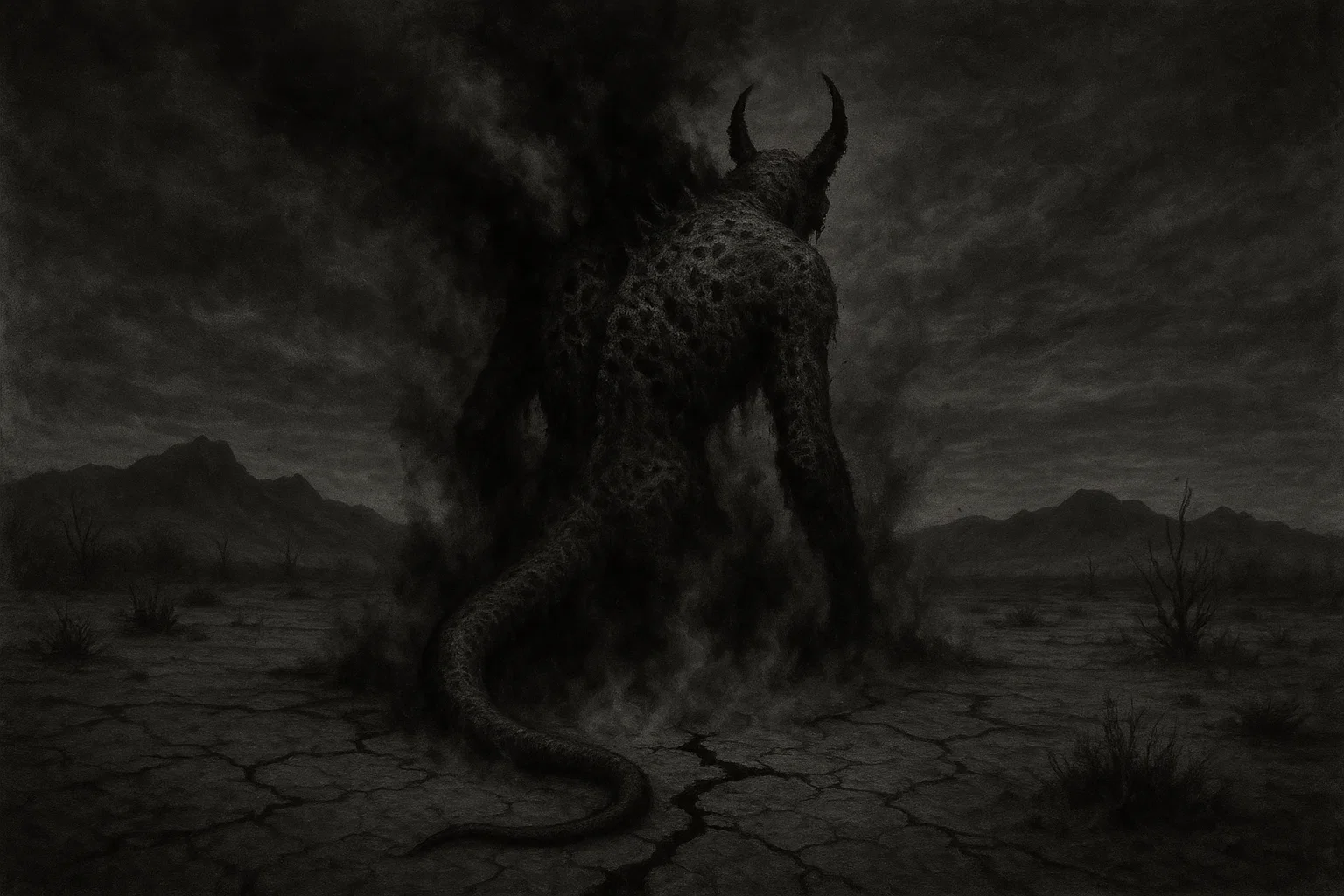
| Appearance | Often described as a shadowy, monstrous figure, serpentine, inherently foul, and ugly, embodying putrefaction and stench, antithetical to light |
| Powers & Abilities | Counter-creation (creates venomous creatures, disease, cold, and famine), deception, spiritual and material corruption, inducing ill will and sin, command over the Daevas |
| Associated Figures | Ahura Mazda, Zurvan, Spenta Mainyu, Zarathustra, Gayomart, Yima, The Daevas, Azi Dahaka, Fravashi, Jamshid, King Vishtaspa, Vohu Manah, Asha Vahishta, Khshathra Vairya, Spenta Armaiti, Haurvatat, Ameretat |
| Weaknesses | Good thoughts, good words, good deeds (the Avestan triad), ritual purity, the recitation of sacred texts like the Ahuna Vairya prayer, the ultimate victory of Ahura Mazda at the end of time |
| Opposing Forces | Ahura Mazda (Ohrmazd), Spenta Mainyu (Bounteous Spirit), Amesha Spentas (Holy Immortals – Vohu Manah, Asha Vahishta, Khshathra Vairya, Spenta Armaiti, Haurvatat, Ameretat), Yazatas (Worship-worthy ones), Fravashis (Guardian Angels) |
| Pantheon | Ancient Iranian (Zoroastrian) |
| Region of Origin | Ancient Iran (Persia) |
| First Known Appearance | Circa 1500–1000 BCE in the Gathas of the Avesta |
| Primary Sources | The Avesta (especially the Gathas and Vendidad), Bundahishn, Denkard, Zand-i Vahman Yasn, Shikand Gumanig Vizar |
Description
Ahriman, or Angra Mainyu, is the embodiment of the evil principle within Zoroastrian dualism. It is a fundamental, uncreated entity whose nature is entirely destructive, malicious, and opposed to life.
Ahriman’s entire existence serves to explain the origin of all that is harmful, imperfect, and painful in the world, establishing a clear moral dichotomy in which every good creation of Ahura Mazda has an evil counterpart created by Ahriman.
This opposition is not merely moral but ontological, representing the ongoing spiritual and material conflict between pure good and absolute evil. Ahriman is the cosmic force of the Lie (Drug), in contrast to Ahura Mazda’s Truth (Asha).
He inherently represents non-life, the state of bad mind (Akoman), and seeks perpetually to corrupt, degrade, and eventually destroy the ordered, beautiful, and vibrant creation of the benevolent deity. He is defined by his primal hatred of light, order, and goodness, and he desires only to return existence to a state of dark, silent, and foul chaos.
Appearance
Ahriman is not consistently depicted with a single physical form, as his essence is that of an unholy, destructive spirit. Still, when manifested, he takes a form that is the antithesis of all beauty and light. He is frequently described as possessing an inherent hideousness and foulness, emitting a terrible stench that immediately announces his presence and contaminates all it touches.
In Persian iconography and texts, he is often shown as a monstrous and snake, sometimes taking the form of a great snake, wolf, or lizard. Descriptions consistently focus on a physical manifestation that symbolizes filth, ugliness, and putrefaction, making him visually repulsive to the forces of goodness and light.
His essence is a boundless, corrupting darkness or shadow, capable of metamorphosis into the most terrifying or deceptive daemonic shapes. Still, his true nature is defined by an utter lack of light and vitality.
The Complete Fiction of H.P. Lovecraft
Every tale of cosmic horror in one definitive collection — Cthulhu, Yog-Sothoth, ancient gods, forbidden tomes, and the madness that lies beyond the stars: Call of Cthulhu ● At the Mountains of Madness ● Shadow Over Innsmouth ● The Dunwich Horror ● Complete Mythos
History
The Primordial Choice and the Separation
The nature of Ahriman’s origin dictates the entire structure of the universe. In the orthodox Zoroastrian view, before the material world was formed, there existed two ultimate, primordial Spirits.
Ahura Mazda was the Omniscient Lord, living in endless light and possessing perfect goodness.
Angra Mainyu (Ahriman), co-existent but hiding in endless darkness, was characterized by his lack of knowledge, envy, and malice.
After realizing the existence of Ahura Mazda and the perfection of the light, Ahriman became aware of a choice. Ahriman, being inherently destructive and malignant, consciously chose the Lie (Drug) and the path of non-life, setting himself against the Bounteous Spirit (Spenta Mainyu) of Ahura Mazda, who chose Truth (Asha) and life.
The Attack on Creation and the Mixed State
Ahura Mazda, knowing of Ahriman’s destructive intent, created the world in a state of perfect, unassailable purity and immortality (Mēnōg or spiritual state). This was done as a defense, setting a definite time limit of 9,000 years for the conflict.
Ahriman, seeing this creation, grew enraged and mounted his devastating assault. The demonic host, led by Ahriman, first plunged a hole through the sky, polluting the spiritual structure.
Then, in the form of a great serpent or dragon, Ahriman burst into the material world (Gētik), mixing his corruption with every good creation. He poisoned the waters, introduced disease into the Primeval Ox (Gavaevodata), and brought the spiritual taint of death to the first man, Gayomart.
Ahriman’s attack corrupted the perfect, good world and initiated the cosmic struggle, mixing the forces of good and evil into the present, imperfect state of the world, known as Gumezishn (Mixture). He established a one-to-one opposition for every good entity; for example, creating the venomous scorpion to oppose the benevolent dog.
The Temptation of Zarathustra
Once the prophet Zarathustra received the revelation from Ahura Mazda, Ahriman recognized him as the greatest threat to his dominion of the Lie. He sent his chief lieutenant, the Daeva of Bad Thought (Aka Manah), to try to sway the prophet, but this attempt failed.
Later, Ahriman himself appeared to Zarathustra, offering him the immediate kingship of the world and untold power if he would simply renounce the Good Religion. Ahriman’s voice was tempting, but his inherent stench and ugliness betrayed his true nature.
Zarathustra immediately rejected the offer, countering the demon’s lies with the sacred word of the Avesta, primarily the powerful prayer Ahuna Vairya. The power of the holy truth was so overwhelming that Ahriman and his demonic legions were forced to retreat back into the earth, crying out in pain and despair that their work was being destroyed by the righteous law.
The Complete Lesser Key of Solomon Awaits. Flash Sale – Up to 10% OFF!
The Complete Lemegeton (Books I-V). The legendary 17th-century grimoire of demon summoning, angelic evocation, sacred seals, and ancient magick — all five books in one definitive edition. Ars Goetia ● Theurgia Goetia ● Paulina ● Almadel ● Notoria.
The Downfall of Yima and the Reign of Evil
Ahriman’s power of deception is also vividly demonstrated in the myth of the great King Yima (Jamshid). Yima was granted divine favor (Khvarenah) and ruled over a golden age where his people were immortal and lacked want.
However, Ahriman knew that the most perfect beings are often the most vulnerable to the poison of pride. After centuries of glorious rule, Ahriman successfully planted the seed of arrogance in Yima’s heart.
Yima eventually committed the ultimate moral transgression by speaking the Lie (Drug), proclaiming to his subjects: “I am the creator of the world!” This act instantly caused the divine glory (Khvarenah) to abandon him, separating from Yima in the form of three successive birds.
Bereft of his divine protection, Yima became susceptible to death and suffering. His downfall paved the way for the monstrous serpent-king Azi Dahaka, an agent of Ahriman, to seize the throne and initiate a period of tyranny, famine, and dark magic, proving how one single moral failure—the adoption of the Lie—can allow Ahriman’s darkness to eclipse a golden age.
The Eschaton and Final Defeat
Zoroastrian eschatology mandates the inevitable and final defeat of Ahriman. Throughout the 9,000-year cycle, Ahriman attempts to sway human souls, especially near death, where the spirit must cross the Chinvat Bridge (Bridge of the Separator). If the soul has succumbed to the Lie, Ahriman’s demon Vizaresha (The Drag-away) attempts to seize the soul.
However, the world is destined for the Frashokereti (Renovation). After three millennia of the final age, the savior, Saoshyant, will be born, leading the final battle against Ahriman and his host. The forces of good will utterly defeat the legions of evil, and Ahriman himself will be eternally powerless, either by being trapped in a purified Abyss or by having his essence of maliciousness entirely burned away.
This final act ensures that Ahriman will never again be able to attack creation, and the universe will be returned to the perfect, unmixed, and immortal state (Pattāg).
Genealogy
| Attribute | Details |
| Parents | Zurvan (Time, in Zurvanism), or the product of a choice independent of Ahura Mazda (in orthodox Zoroastrianism) |
| Siblings | Ohrmazd (Ahura Mazda) (in Zurvanism), Spenta Mainyu (Bounteous Spirit) |
| Consorts | Jahi (The Whore, personification of lust and menstruation), Az (Concupiscence) |
| Offspring | Not applicable in the same way as human/god procreation; he is the source of all evil spirits, including the Daevas and Drujes |
| Other Relationships | Chief Lieutenants: Aka Manah (Bad Thought), Indra (Unsanctioned War), Saurva (Oppression). He creates the six chief Daevas to oppose the six benevolent Amesha Spentas of Ahura Mazda. |
The Forbidden Book That Even Angels Feared. Limited-Time: Up to 90% OFF!
The ancient apocalyptic text banned from the Bible — visions of the Watchers, fallen angels, the Nephilim giants, secrets of heaven, and the coming judgment: Fallen Watchers ● Nephilim Origins ● Heavenly Journeys ● End-Times Prophecy ● Lost Enochian Mysteries
Sources
| Source | Quote |
| The Gathas (Yasna 30:3) | …Spenta Mainyu (Holy Spirit) and Angra Mainyu (Destructive Spirit) – these two spirits have been perceived in a vision, each with its own separate and distinct powers, the one holding to life, the other to non-life. And how they shall be at the end of the world. |
| Vendidad (Fargard 1:3-4) | …and Angra Mainyu, who is all death, created the counter-creation in the form of the yellow-fever, that takes life away. |
| Bundahishn (Chapter 1) | Ohrmazd was in the light, and Ahriman in the darkness; Ohrmazd was cognizant of Ahriman’s existence and of his coming for the contest. Ahriman was ignorant of Ohrmazd’s existence. |
| Bundahishn (Chapter 3) | The Spirit of Destruction, Angra Mainyu, saw that creation of Ohrmazd, and as he saw it, he wanted to destroy it; and as he wanted to destroy it, he rushed towards it… |
| Shāhnāmeh (The Book of Kings, Firdawsi) | Ahriman, the arch-demon, beheld the glory of his (Jamshid’s) fortune and perceived that its ruin lay in his pride. |
| Zand-i Vahman Yasn (Chapter 1) | …and Ahriman, that evil-doing fiend, will come to the earth with the multitude of the fiends, and will make the creation a waste. |
Powers
Ahriman’s powers are focused entirely on anti-creation and the spiritual corruption of Ahura Mazda’s perfect world, a mechanism known as hamesh-kar (counter-action).
Ahriman’s supreme power is the ability to directly invert and pollute good entities. For every creation of light and goodness, Ahriman initiates a destructive twin: he creates winter and scorching heat to oppose Ahura Mazda’s mild seasons, and he creates venomous snakes and the wolf to oppose beneficial creatures like the dog. This counter-creation manifests as all natural disasters, blight, and famine.
Spiritually, Ahriman exerts influence by planting the Lie (Drug) and bad thought (Akoman) into the minds of mankind, thereby undermining the divine concept of free will, which is the battleground for the two spirits. He uses this power to induce spiritual decay, leading to moral transgression, discord, and apostasy.
He uses the Daevas, his demonic lieutenants who personify specific vices (e.g., Aeshma for wrath, Jahi for lust), as instruments to execute his malice, commanding them to inflict disease, war, and moral decay on the world.
In the end, his most profound power is introducing death and entropy into the universe, ensuring that everything created is subject to eventual decay and suffering until his final defeat.
Occult correspondences
| Attribute | Details |
| Planet | Pluto (Modern Association), The Black Sun, The Abyss |
| Zodiac Sign | Ophiuchus (The Serpent-Bearer), Scorpio, Capricorn |
| Element | Darkness, Cold, Contamination |
| Direction | North (The region of the Daevas and the Abyss) |
| Color | Black, Grey, Deep Red |
| Number | Six (The number of chief Daevas under his command) |
| Metal | Lead, Iron |
| Crystal / Mineral | Sulphur, Obsidian, Jet |
| Herb / Plant | Poisonous Nightshade, Hemlock, Mandrake |
| Incense | Sulphur, Stale Animal Matter |
| Sacred Animal / Symbol | Serpent, Scorpion, Toad, Fly, Wolf, The Dragon Azi Dahaka, The Black Star |
Tags:
Explore More Demons…
Baykok (Ojibwe Flying Skeleton Demon)
March 2, 2026
February 17, 2026
January 19, 2026
Zahhak (Zoroastrian Dragon-Demon)
February 6, 2026
December 2, 2025
Alû (Mesopotamian Night Demon)
January 14, 2026
