
The Baku is a supernatural creature from Japanese folklore, known as a yokai or holy beast. Its main role is to eat human nightmares and protect people while they sleep.
In Japanese Shinto-Buddhist tradition, the Baku is seen as a kind of chimera and a powerful symbol of good luck. People often call on it for protection from illness and evil spirits, or to turn bad luck into good.
Table of Contents
Overview
| Attribute | Details |
| Primary Name | Baku |
| Other Names | Mo, Hakutaku (related/often conflated), Meng Shou, Dream-Eater |
| Titles | Eater of Nightmares, Guardian of Sleep, The Auspicious Beast, Devourer of Bad Dreams, Protector Against Pestilence |
| Gender | Genderless / Ambivalent |
| Alignment | Ambivalent/Mischievous (Neutral Good context) |
| Role | Nightmare Invader (Consumption), Transformer of Fate, Warding Spirit |
| Rank | Minor Yokai / Auspicious Holy Beast |
| Hierarchy | Independent spirit / Sometimes associated with the court of Enma (Judge of the Dead) in a protective capacity |
| Legions / Followers | None |
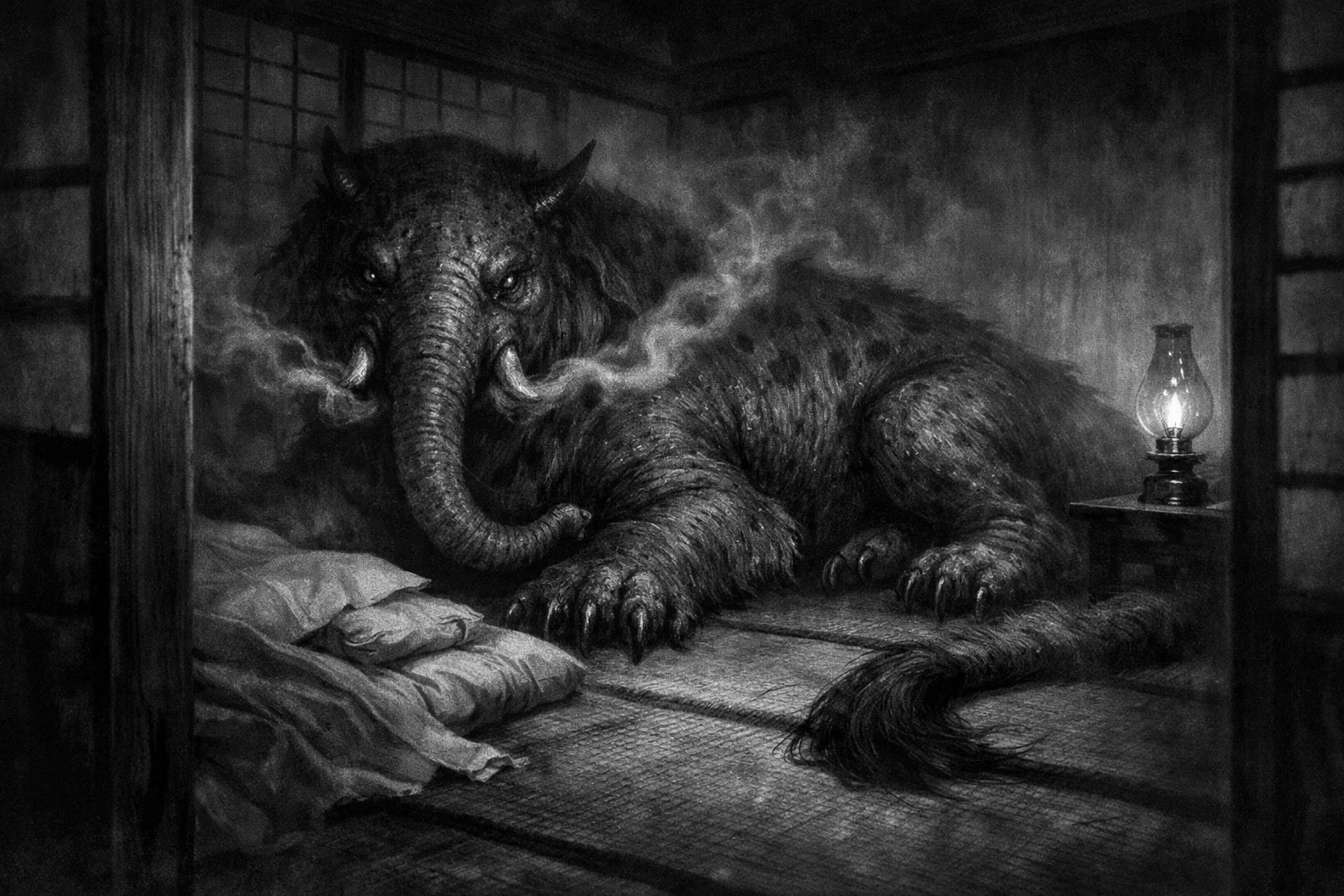
| Appearance | A chimera featuring the trunk of an elephant, the eyes of a rhinoceros, the tail of an ox, and the paws of a tiger. |
| Powers & Abilities | Dream consumption, ability to turn nightmares into good luck, protection against disease and evil omens. |
| Associated Figures | Enma-O, Hakutaku, Kobo Daishi, Hokusai, Izanagi, Jizo Bosatsu, Benzaiten, Bishamonten |
| Weaknesses | Starvation (if dreams are not provided), Over-consumption (may eat hopes and desires if called too often) |
| Opposing Forces | Nightmare-inducing spirits, vengeful ghosts (Yurei), entities of permanent insomnia |
| Pantheon | Japanese Shinto-Buddhist |
| Region of Origin | China (Tang Dynasty roots) via Heian-period Japan |
| First Known Appearance | Approx. 14th century (Muromachi period) in Japanese literature; Chinese roots date to the “Shan Hai Jing” |
| Primary Sources | Shan Hai Jing (Classic of Mountains and Seas), Konjaku Hyakki Shui by Toriyama Sekien, Hokusai Manga |
Description
The Baku is a mysterious being that exists between the physical and spiritual worlds, especially in the world of dreams. It stands for filtering out negative energy and turning it into something harmless.
Unlike demons that only cause harm, the Baku acts as a helpful cleaner for the mind, showing the belief that bad spiritual influences can be removed by being consumed. In Japanese culture, the Baku represents the importance of protecting both the home and the mind, especially during sleep.
People see the Baku not as a tempter, but as a special creature that eats the ‘pollution’ of the spirit world. Doing this helps prevent bad dreams from becoming real problems or bad luck.
Appearance
The Baku has a unique body made up of parts from different animals. It usually has the long trunk of an Asian elephant and the sharp eyes of a rhinoceros. Its body is strong like a bear or a lion and covered in thick, rough skin.
Its legs end in strong, clawed tiger paws, and it has a long, tufted tail like an ox. Old pictures often show its skin with spots or scales, and sometimes it has tusks or small horns. The Baku is usually shown lying down or coming out of mist, which highlights its dreamlike and mysterious nature.
History
Origins in the Middle Kingdom
The Baku’s origins come from ancient Chinese records, where it was first known as the Mo. Early stories about it appear in the Shan Hai Jing (Classic of Mountains and Seas), a key Chinese mythological text from the 4th century BCE.
At first, this creature was not known for eating dreams but for eating metal. It was described as a strong animal living in the southern mountains, with skin so tough that weapons could not harm it.
During the Tang Dynasty, the Mo was seen as a protective animal. People believed that sleeping on its fur could keep away disease and protect them from the harmful ‘miasma’ that caused sickness.
By the 9th century, during the Tang Dynasty, images of the creature were often painted on folding screens and embroidered on pillows for the nobility.
As Chinese Buddhism and Taoist ideas blended, the creature changed from a protector against disease to a guardian against nightmares. The ‘bad vapors’ it was said to eat became seen as the troubles of the night.
When the story came to Japan in the late Heian and early Muromachi periods, it became part of Japanese books on medicine and lists of yokai. Japanese scholars combined the Chinese idea of a metal-eating beast with their own beliefs about sacred animals, called reiju.
This change was recorded in works such as the Wakan Sansai Zue, an encyclopedia from the 1700s. These texts made it clear that the Baku survived by eating people’s ‘malicious thoughts’ and ‘terrifying visions.’
Temple records from the Edo period show that the Baku was called on in official rituals to protect the Shogun’s sleep. This raised its status from a folk belief to an important part of Japanese spiritual tradition.
The Ultimate Yokai Encyclopedia. Limited-Time: Up to 28% OFF!
Over 300 entries on Japan’s most haunting spirits — yōkai, oni, kitsune, ghosts, and mythical creatures from ancient scrolls to modern legends, fully illustrated: Kappa & Tengu ● Kitsune & Tanuki ● Yūrei Ghosts ● Oni Demons ● Legendary Beasts.
The Guardian of the Muromachi Period
In the 14th and 15th centuries, Baku became a common entity in Japanese folk stories. The ritual for calling it was set during this time: a child who had a bad dream would say, ‘Baku, come eat my dream’ three times.
According to legend, the Baku would then enter the room and inhale the nightmare, allowing the child to rest peacefully. During this time, the Baku changed from a general protector to a special guardian of sleep. It was often shown in woodblock prints and on charms placed under pillows for a good night’s sleep.
The Edo Period and the Golden Age of Yokai
During the Edo period, stories and art about supernatural beings became very popular. Artists like Toriyama Sekien and Katsushika Hokusai helped define how the Baku looked. In these stories, the Baku was not just a quiet guardian but had its own personality.
Some stories said that Baku was a picky eater, sometimes refusing to eat dreams that were too boring. Other tales warned that if it was too hungry, it might eat not just nightmares but also a person’s hopes and ambitions. Because of this, people were careful not to ask the Baku for help too often, or they might end up feeling empty inside.
Modern Manifestations
In the 20th and 21st centuries, the Baku moved from old woodblock prints into modern media. While some rural areas still keep the dream-eater ritual, the Baku now appears in popular culture, especially in animation and games, where it often has magical or mechanical dream-eating powers.
Even with these changes, the main story stays the same: the Baku is a mixed-form creature that stands between nightmares and the safety of waking life.
Genealogy
| Attribute | Details |
| Parents | None (Manifested from the leftover parts of creation) |
| Siblings | Hakutaku (spiritual kin) |
| Consorts | None |
| Offspring | None |
| Other Relationships | Servant of the dreaming populace, Ally to the Sleepers |
The Classic Masterwork of the Black Arts. Limited-Time: Up to 42% OFF!
The legendary 1967 guide to forbidden magick — witchcraft, Satanism, demonology, alchemy, astrology, rituals, and the dark history of occult power through the ages: Black Magick ● Alchemy & Astrology ● Kabbalah ● Ritual Magic ● Satan & Demons
Sources
| Source | Quote |
| Shan Hai Jing | The Baku is like a bear, with an elephant’s trunk, a rhinoceros’s eyes, an ox’s tail, and a tiger’s feet. |
| Konjaku Hyakki Shui | When one has a bad dream, if they call out for the Baku, it will come and eat the dream, turning the bad fortune into good. |
| Baku-mon | If the Baku eats the nightmare, the sleeper awakens refreshed, for the evil of the night has been consumed. |
Powers
Baku has a special power to affect the subconscious. Its main ability is ‘astral consumption,’ where it uses its trunk to inhale the energy of a nightmare. This doesn’t just erase the dream—it removes the bad spiritual effects linked to it. By eating the dream, the Baku stops bad luck or illness from happening in real life.
The Baku also has the power of ‘Auspicious Transformation.’ After it digests a nightmare, it gives off a special energy that brings good luck to the dreamer. This is why people see the Baku as a holy beast, not just a demon.
However, Baku’s power can be risky. If someone calls on it too often or without a real need, the Baku may start to take away their positive dreams and desires, too. This can leave a person feeling empty and unmotivated, with no drive to reach their goals.
Occult correspondences
| Attribute | Details |
| Planet | Moon |
| Zodiac Sign | Cancer |
| Element | Ether / Spirit |
| Direction | Center / Northeast |
| Color | White and Blue |
| Number | 9 |
| Metal | Iron |
| Crystal / Mineral | Moonstone |
| Herb / Plant | Mugwort |
| Incense | Sandalwood |
| Sacred Animal / Symbol | Elephant / Tapir |
Tags:
Explore More Demons…
December 2, 2025
February 2, 2026
February 9, 2026
January 5, 2026
February 26, 2026
