

Belial is a major demon first mentioned in Hebrew texts, where his name meant worthlessness, lawlessness, and wickedness. Over time, Belial shifted from being just a symbol of evil to a powerful, high-ranking entity. He is often called a prince of darkness, a king of the bottomless pit, and one of the most important fallen angels.
In the Middle Ages and the Renaissance, demonology described Belial as a powerful King of Hell who commands 60 legions of spirits. He is mainly known as a master of deception and as someone who spreads legal and political corruption. In some occult systems, he is one of the four crown princes of Hell and often represents the element of Earth and the direction North.
Table of Contents
Overview
| Attribute | Details |
| Primary Name | Belial |
| Other Names | Beliar, Berial, Beliel, Belias, Belhor, Baalial, Beliar-al, Matanbuchus |
| Titles | The King of Lawlessness, The Angel of Hostility, The Prince of Darkness, The King of the Bottomless Pit, The Wicked One, The Son of Perdition, The Worthless One, The Sixty-eighth Spirit of the Goetia, Mighty King of Hell, The Lord of Lies, The Ruler of the World, The Angel of Wickedness |
| Gender | Male |
| Alignment | Lawful Evil |
| Role | Tempter of Lawlessness, Master of Deception, Provider of False Dignities, Corruptor of Justice, Inciter of Wickedness, Sower of Discord among Siblings |
| Rank | King of Hell, Prince of the Seraphim (formerly), Archdemon |
| Hierarchy | Serves Lucifer; commands 80 legions of spirits |
| Legions / Followers | 80 Legions (Ars Goetia), 60 Legions (Pseudomonarchia Daemonum) |
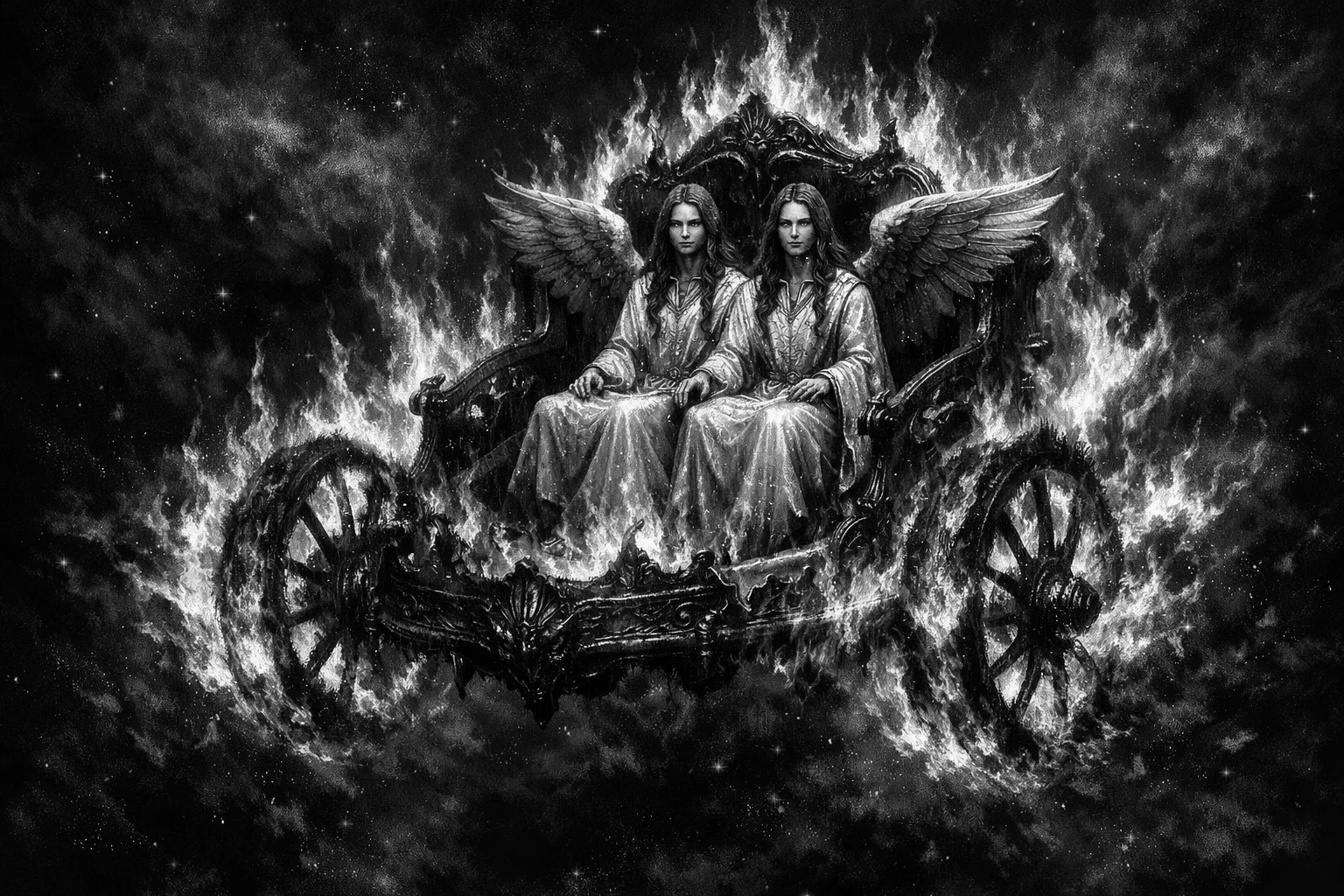
| Appearance | Two beautiful angels sitting in a chariot of fire |
| Powers & Abilities | Grants high titles and offices, secures favor of friends and enemies, provides excellent familiars, induces lawlessness, manipulates legal outcomes |
| Associated Figures | Lucifer, Satan, King Solomon, Mastema, Azazel, Beelzebub, Michael, Gabriel, Jesus Christ, St. Bartholomew, Simon Magus |
| Weaknesses | Sacrifices and offerings, Holy names, Commands given in the name of God, Seals of Solomon |
| Opposing Forces | Archangel Michael, Jesus Christ, The Spirit of Truth, The Angel of Peace |
| Pantheon | Abrahamic (Jewish/Christian/Gnostic) |
| Region of Origin | Ancient Israel / Levant |
| First Known Appearance | Approx. 10th-8th century BCE (as a term in the Hebrew Bible) |
| Primary Sources | The Hebrew Bible, The Dead Sea Scrolls, The Testament of Solomon, The Ascension of Isaiah, The Ars Goetia, Pseudomonarchia Daemonum |
Description
Belial stands for worthlessness and lawlessness. In theology, he represents rejecting divine and moral law. Unlike demons tied to violence or lust, Belial works by undermining social and legal order. He shows how human institutions can be corrupted and become empty.
More broadly, Belial represents emptiness or a lack of spiritual value. He shows the deceptive side of worldly status and the empty rewards of political power.
In the War of the Sons of Light Against the Sons of Darkness, he is the main enemy who leads the forces of darkness in a destined conflict against the divine order. He stands for the ongoing presence of chaos and rebellion in the universe.
Appearance
Grimoires often describe Belial as appearing in a form that hides his evil nature. He takes the shape of two beautiful angels sitting in a chariot of fire. His voice is said to be graceful and pleasant to hear.
In traditional descriptions, Belial doesn’t have monstrous or animal-like traits. He does not have horns, wings (except in his angelic form), or cloven hooves. His beauty is meant to hide his inner corruption. He appears attractive rather than frightening, so he can interact with practitioners without causing immediate fear.
The fiery chariot shows his high rank and his former place among the heavenly choirs. He keeps a royal and celestial look even after his fall from grace.
History
Origins and Etymological Genesis
Belial was not originally a personal name but a Hebrew compound noun, Beli-ya’al, meaning “without value” or “worthless.” In the earliest layers of the Hebrew Bible, the term functioned as a descriptor for the most extreme forms of human depravity.
To be a “son of Belial” was to be a person who had completely cast off the “yoke” of divine and moral law. This abstract concept of lawlessness gradually underwent personification during the Second Temple period.
By the time the Dead Sea Scrolls were authored around the 2nd century BCE, Belial had transitioned from a literary metaphor into a specific, sentient arch-demon. He was repositioned as the “Angel of Enmity,” a cosmic adversary deliberately created by the divine to rule the domain of darkness and supervise the “spirits of his lot.”
The Black Book of Forbidden Secrets. Limited-Time: Up to 71% OFF!
The infamous 19th-century grimoire of dark arts — charms, talismans, spells, omens, dream interpretation, and occult rituals once hidden from the public: Black Magick ● Love Spells ● Talismans & Amulets ● Fortune-Telling ● Curses & Hexes
The War Scroll and the Qumran Covenant
In the War of the Sons of Light Against the Sons of Darkness, found among the Dead Sea Scrolls, Belial is the supreme commander of the infernal legions. The text describes a predestined, apocalyptic conflict in which the “army of Belial” comprises both spiritual entities—referred to as the “angels of destruction”—and human nations that have rejected the covenant.
The Qumran community viewed the world through a strict dualistic lens. While God directed the Prince of Light, Belial was granted dominion over the era of wickedness.
Legends within this community spoke of the “Three Nets of Belial”—fornication, wealth, and the pollution of the sanctuary—which the demon used to ensnare Israel. It was believed that Belial personally inspired the Egyptian sorcerers Jannes and Jambres to oppose Moses, thereby marking him as the ancient architect of spiritual rebellion throughout history.
The Patriarchal Testaments and the Antichrist
The Testaments of the Twelve Patriarchs further expanded the narrative of Belial as a direct rival to the divine. In these accounts, Belial is described as the source of the “seven spirits of seduction” that enter human beings at birth.
The legend of the Patriarch Levi prophesies that in the end times, the Messiah will wage war against Belial, eventually binding him and granting the righteous the power to trample his evil spirits. On the other hand, the Sibylline Oracles present a unique legend in which Belial is identified with the Antichrist.
In this tradition, Belial descends from the stars or arises from the city of Sebaste to perform false miracles, such as raising the dead and stilling the sea, to deceive the Samaritans and the world before being consumed by heavenly fire.
The Ascension of Isaiah and the Fall
In the Ascension of Isaiah, a significant early Christian pseudepigraphal work, Belial is identified by the name Matanbuchus and characterized as the “ruler of this world.”
The narrative recounts how Belial took up residence within King Manasseh of Judah, inducing him to abandon the worship of God and instead serve the powers of lawlessness. This text reinforces the legend that Belial was the primary force behind the martyrdom of the prophet Isaiah.
Later medieval developments in the Ars Goetia and Pseudomonarchia Daemonum integrated these older myths into a formal hierarchy. These grimoires claimed that Belial was one of the first angels to fall, following immediately after Lucifer.
He was said to have been among the spirits trapped in a large brass vessel by King Solomon and cast into a deep lake in Babylon, where he was eventually freed by the Babylonians who broke the seal in search of treasure.
The Forbidden Book That Even Angels Feared. Limited-Time: Up to 90% OFF!
The ancient apocalyptic text banned from the Bible — visions of the Watchers, fallen angels, the Nephilim giants, secrets of heaven, and the coming judgment: Fallen Watchers ● Nephilim Origins ● Heavenly Journeys ● End-Times Prophecy ● Lost Enochian Mysteries
The War in Heaven
According to some apocryphal traditions, Belial’s role in the angels’ rebellion was not merely that of a soldier but also that of a chief instigator.
While Lucifer is often credited with the pride that led to the fall, certain legends suggest that it was Belial’s deceptive counsel and “pleasant voice” that convinced a third of the heavenly host that they could achieve a state of “self-sufficiency” independent of the Creator.
In these narratives, Belial represents the intellectual and legalistic argument for rebellion, framing the war not as a desire for evil, but as a quest for “true independence.” After being cast into the Abyss, he was the last to lose his angelic form, retaining a deceptive beauty to facilitate his role as the master of lies in the material world.
Genealogy
| Attribute | Details |
| Parents | Created directly by God |
| Siblings | Lucifer (created first), other Archangels (spiritual kin) |
| Consorts | No specific consorts listed in primary texts |
| Offspring | The Children of Belial (metaphorical for the wicked) |
| Other Relationships | Second-in-command to Lucifer; Master of the demon Merezin |
Sources
| Source | Quote |
| Deuteronomy 13:13 | Certain men, the children of Belial, are gone out from among you, and have withdrawn the inhabitants of their city, saying, Let us go and serve other gods, which ye have not known. |
| 2 Corinthians 6:15 | And what concord hath Christ with Belial? or what part hath he that believeth with an infidel? |
| Ars Goetia | The Sixty-eighth Spirit is Belial. He is a Mighty and a Powerful King, and was created next after LUCIFER. He appeareth in the Form of Two Beautiful Angels sitting in a Chariot of Fire. |
| 1QS (Community Rule) | But for the spirit of error are the counsels of Belial and his dominion is in darkness. |
| Testament of Solomon | I am called Belial, and I dwell in the hearts of men, and I am the king of the lawless. |
Powers
Belial mainly works by manipulating social structures and the human ego. He uses the idea of the “false gift.” When summoned, he gives out high titles, political offices, and the favor of both friends and enemies. But these gifts are meant to lead people toward vanity and eventual ruin. He uses his voice and graceful appearance to trick practitioners into thinking he is kind or neutral.
Belial can also grant his followers powerful familiars. These familiars act as spies and help him spread his influence, letting him gather information and control the practitioner’s surroundings.
His influence usually leads to the breakdown of order. He causes legal systems to fail, friendships to turn into legal battles, and communities to break apart by encouraging lawless behavior. His power is not about physical destruction, but about slowly wearing down moral and social foundations.
Occult correspondences
| Attribute | Details |
| Planet | Sun (Ars Goetia) or Earth/Saturn (Modern Occultism) |
| Zodiac Sign | Aquarius |
| Element | Earth |
| Direction | North |
| Color | Yellow, Gold, or Black |
| Number | 68 |
| Metal | Gold |
| Crystal / Mineral | Onyx, Hematite |
| Herb / Plant | Mullein, Henbane |
| Incense | Frankincense, Storax |
| Sacred Animal / Symbol | The Bull, The Chariot |
Tags:
Explore More Demons…
Amaymon (Demon King of the East/West)
January 15, 2026
February 17, 2026
Apophis (Egyptian Chaos Serpent)
January 29, 2026
Agaliarept (Commander Under Lucifer)
December 8, 2025
February 4, 2026
Mahabali (Powerful Asura King)
February 18, 2026
