
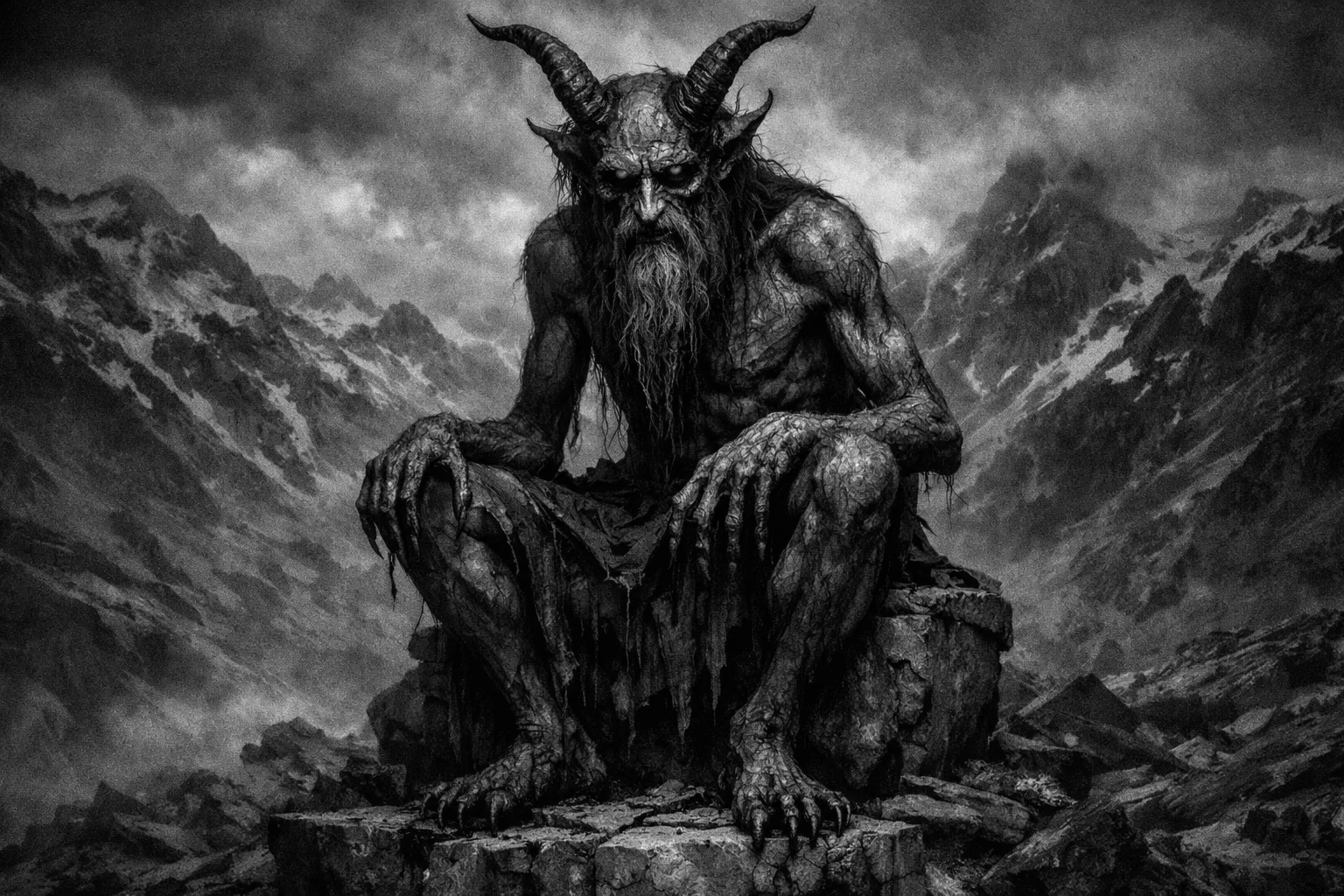

Belphegor is known as a powerful demon in Abrahamic traditions and is counted among the Seven Princes of Hell. The creature comes from the Moabite god Baal-Peor and, over time, became linked to the sin of Sloth in Judeo-Christian beliefs.
Belphegor is often described as a master of discoveries and clever inventions. He is said to tempt people by offering wealth and easy success.
Table of Contents
Overview
| Attribute | Details |
| Primary Name | Belphegor |
| Other Names | Baal-Peor, Baalphogor, Belfagor, Beelphegor, Ba’al Pe’or |
| Titles | Prince of Hell, Lord of the Opening, Archdemon of Sloth, Patron of Inventions, Lord of Wealth, The Demon of Discoveries |
| Gender | Male |
| Alignment | Neutral Evil |
| Role | Tempter of Sloth, Provider of Wealth through Ingenuity, Distributer of Forbidden Inventions, Sower of Discord |
| Rank | One of the Seven Princes of Hell, Chief of the Order of Principalities (formerly) |
| Hierarchy | Serves under Lucifer; commands various spirits of innovation and laziness |
| Legions / Followers | None specified in major grimoires, though associated with the month of April |
| Appearance | A bearded old man sitting on a toilet (latrine) or a beautiful young woman |
| Powers & Abilities | Grants wealth, inspires ingenious inventions, causes procrastination, provides forbidden knowledge |
| Associated Figures | Lucifer, Beelzebub, Asmodeus, Leviathan, Mammon, Satan, Moses, Phinehas, Machiavelli, Peter Binsfeld |
| Weaknesses | Diligence, focused labor, specific holy invocations, the presence of Archangel Gabriel |
| Opposing Forces | Archangel Gabriel |
| Pantheon | Abrahamic (Christian/Jewish/Semitic) |
| Region of Origin | Ancient Moab (Transjordan) |
| First Known Appearance | c. 1400–1200 BCE (as Baal-Peor in the Pentateuch) |
| Primary Sources | The Book of Numbers, The Dictionnaire Infernal, The Lanterne of Light, Binsfeld’s Classification of Demons |
Description
Belphegor stands for both clever thinking and physical laziness. He tempts people with the idea of easy success, giving them plans for inventions or schemes that promise wealth without hard work.
In theology, Belphegor represents Sloth, one of the Seven Deadly Sins. He is seen as a force that pulls people away from hard work and purpose, encouraging comfort over effort. Later occult stories also describe him as a skeptic sent to Earth to see if happy marriages exist, but he decides they do not.
Appearance
Belphegor is usually shown in two very different forms. In his main demonic form, he appears as a tall, ugly creature with a long beard, a large nose, and sharp horns. He is often pictured sitting on a large, decorated toilet or latrine, which stands for his link to waste and basic human needs. His fingers are long and end in sharp, claw-like nails.
For temptation, Belphegor can also appear as a very beautiful young woman. This disguise, with perfect looks and elegant clothes, is meant to attract men and lead them into making deals for forbidden knowledge.
The Classic Masterwork of the Black Arts. Limited-Time: Up to 42% OFF!
The legendary 1967 guide to forbidden magick — witchcraft, Satanism, demonology, alchemy, astrology, rituals, and the dark history of occult power through the ages: Black Magick ● Alchemy & Astrology ● Kabbalah ● Ritual Magic ● Satan & Demons
History
Origins in Moab
Belphegor started as Baal-Peor, a god worshipped by the Moabites on Mount Peor. When the Israelites traveled through the area, they met people who followed this god. Some Israelites even took part in the sacrifices and feasts for Baal-Peor.
These rituals were seen as a betrayal of the Israelites’ beliefs and caused a major crisis. The high priest Phinehas stepped in and, through a forceful act, broke the connection between the Israelites and the Moabite god. This event started Baal-Peor’s change from a local god to a demon in Judeo-Christian stories.
The Fall from Grace
Before becoming a demon, Belphegor was part of the heavenly order. He was a guardian and held a respected position among angels. When Lucifer led a rebellion, Belphegor decided to join the fallen angels.
Belphegor was not as fierce as Satan or as proud as Lucifer, but by joining the rebels, he was cast out of Heaven. After his fall, he changed from a heavenly leader to a demon who encourages laziness and distraction.
The Mission to Earth
A well-known story from the Middle Ages and Renaissance says Belphegor doubted that happy marriages existed. The council of Hell sent him to Earth to find a truly happy couple. He took on a human form and spent years living among people.
The story says that Belphegor searched everywhere but only found arguments, cheating, and unhappiness in every home. Overwhelmed by the problems of marriage, he ran back to the underworld, choosing its torments over life with humans. Niccolò Machiavelli later retold this story in his novella Belfagor arcidiavolo.
The Patron of the Industrial Age
During the Enlightenment and Industrial Revolution, Belphegor’s role changed to match new temptations. He became linked to the sudden wealth that came from new machines and scientific progress.
Stories say that Belphegor gives ambitious people ideas for complicated machines and quick ways to make money. By helping them advance quickly, he makes them rely on their inventions. This leads to a society that cares more about results than effort, encouraging laziness and greed.
Sources
| Source | Quote |
| Numbers 25:3 | And Israel joined himself unto Baalpeor: and the anger of the Lord was kindled against Israel. |
| Deuteronomy 4:3 | Your eyes have seen what the Lord did because of Baalpeor: for all the men that followed Baalpeor, the Lord thy God hath destroyed them from among you. |
| Psalm 106:28 | They joined themselves also unto Baalpeor, and ate the sacrifices of the dead. |
| Hosea 9:10 | …but they went to Baalpeor, and separated themselves unto that shame; and their abominations were according as they loved. |
| Dictionnaire Infernal (1863) | Belphegor: Demon of discoveries and of ingenious inventions. He tempts men by means of wealth. |
The Black Book of Forbidden Secrets. Limited-Time: Up to 71% OFF!
The infamous 19th-century grimoire of dark arts — charms, talismans, spells, omens, dream interpretation, and occult rituals once hidden from the public: Black Magick ● Love Spells ● Talismans & Amulets ● Fortune-Telling ● Curses & Hexes
Powers
Belphegor works by exploiting people’s ambition and their desire for an easy life. He mainly uses his power by giving ‘forbidden’ ideas to inventors, chemists, and businesspeople.
Unlike other demons who use force or possession, Belphegor offers ideas for complex systems that seem helpful but, in the end, lead to moral decline or laziness. When he gives wealth, it often leads people into ‘acedia,’ a kind of spiritual laziness in which they lose the drive to do good.
He can also cause problems in homes by pointing out partners’ flaws and secrets, breaking trust in marriages. He uses his transformation power to appear as a beautiful woman, which helps him trick people who would avoid his true, ugly form.
Because of his influence, people slowly become completely dependent on comfort and technology. This traps them in a cycle of putting things off and focusing only on the physical world.
Occult correspondences
| Attribute | Details |
| Planet | Venus (or Saturn in some traditions) |
| Zodiac Sign | Aries |
| Element | Earth |
| Direction | North |
| Color | Black or Pale Yellow |
| Number | 6 or 9 |
| Metal | Copper or Lead |
| Crystal / Mineral | Obsidian |
| Herb / Plant | Mandrake |
| Incense | Sulfur or Frankincense |
| Sacred Animal / Symbol | The Latrine or an Open Mouth |
Tags:
Explore More Demons…
December 3, 2025
Alal (Mesopotamian Destroyer Demon)
January 8, 2026
December 1, 2025
Mahabali (Powerful Asura King)
February 18, 2026
Banasura (Hindu Thousand-Armed Asura)
February 20, 2026
Aeshma (Zoroastrian Demon of Wrath)
December 4, 2025
