
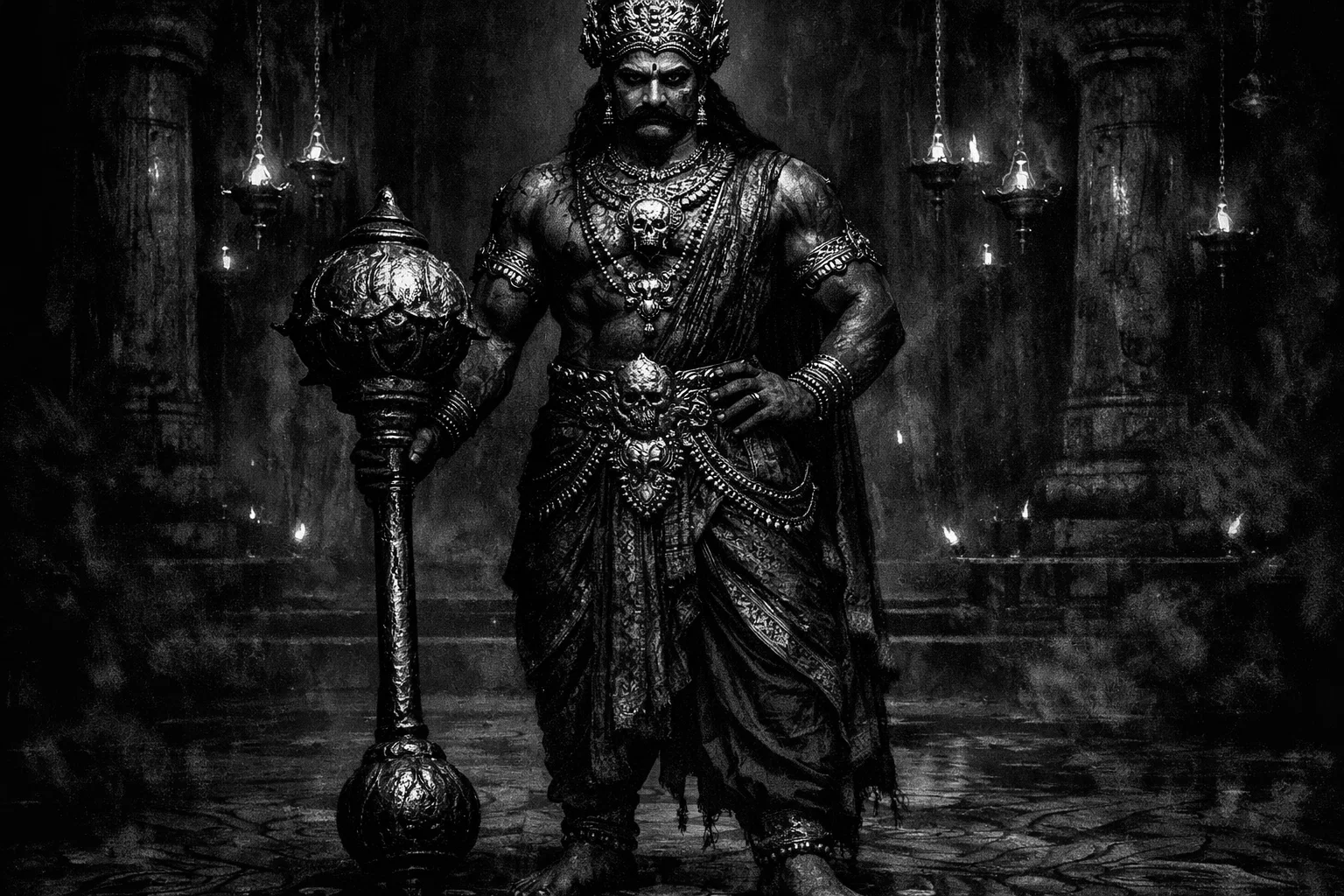

Mahabali is a key entity in Hindu mythology, known as a powerful Asura King who ruled the three worlds. Although Asuras are often seen as rivals to the Devas, Mahabali is remembered as a kind and virtuous ruler. His story is best known for his encounter with Vamana, the fifth avatar of Lord Vishnu, which led to his removal from the earth to the underworld.
Within Hindu tradition, Mahabali is seen as an entity of great spiritual and political power. He is the grandson of Prahlada and comes from the strong Daitya family line. He is especially important because he is a “Chiranjeevi,” or immortal, and is believed to become the next Indra, the King of the Gods, in the next cosmic age.
Table of Contents
Overview
| Attribute | Details |
| Primary Name | Mahabali |
| Other Names | Maveli, Onam-thappan, Indrasena, Ashvamedha-yaji |
| Titles | Chakravarthi, King of the Three Worlds, Daitya-raja, Asura-raja, Danava-pati, Great Benevolent One, Future Indra |
| Gender | Male |
| Alignment | Lawful Neutral / Ambivalent |
| Role | Usurper of Celestial Realms, Challenger of Divine Authority, Ruler of the Underworld (Patala) |
| Rank | King of Asuras, Emperor of the Universe, Future King of Heaven |
| Hierarchy | Grandson of Prahlada, Son of Virochana, Father of Banasura, Subject of Vishnu |
| Legions / Followers | Armies of Daityas and Danavas, Shukracharya (Preceptor) |
| Appearance | A regal, towering humanoid with a crown, often depicted with a mustache and traditional royal ornaments. |
| Powers & Abilities | Invulnerability through sacrifice, control over the three worlds, mastery of celestial weapons, immense physical strength. |
| Associated Figures | Vishnu, Vamana, Prahlada, Shukracharya, Banasura, Indra, Kashyapa, Diti, Aditi, Lakshmi |
| Weaknesses | Extreme generosity, commitment to his word, tactical vulnerability during sacrificial rituals. |
| Opposing Forces | Indra, The Devas, Vamana (Vishnu) |
| Pantheon | Hindu |
| Region of Origin | Ancient India (specifically linked to the Kerala region in later traditions) |
| First Known Appearance | Circa 500 BCE – 200 BCE (Early Puranas and Epics) |
| Primary Sources | Bhagavata Purana, Vishnu Purana, Ramayana, Mahabharata, Padma Purana |
Description
Mahabali stands for the idea of the “Virtuous Adversary.” In Hindu Puranic stories, he shows that goodness and strength are not limited to the Devas.
Mahabali’s strong sense of righteousness challenged the cosmic order and even threatened the gods’ position. Although he was a fair ruler, his desire to rule the heavens upset the balance between the mortal, divine, and underworld realms.
Unlike most evil spirits, Mahabali does not cause chaos for its own sake. Instead, he represents the struggle for control in the universe and the need for divine help to restore order.
Appearance
Mahabali is usually shown as a strong and impressive figure. He has a large, muscular body, fitting for an Asura king. His skin can be golden or dark, and he wears elaborate jewelry, including heavy necklaces, armbands, and a jeweled crown.
He is often shown with a neat mustache and big, expressive eyes that show his authority and wisdom. In art, he wears royal silk clothes called a dhoti and carries weapons such as a mace or a sword.
When Mahabali meets Vamana, he is often shown holding a golden water pot, symbolizing his dedication to giving. In modern folk art, especially in South India, he appears as a cheerful, pot-bellied king with a palm-leaf umbrella.
The Ultimate Encyclopedia of Demons. Limited-Time: Up to 25% OFF!
The definitive A–Z guide to demonology — over 400 entries on demons, possession cases, exorcisms, global traditions, and dark entities throughout history, illustrated with rare photos: Ancient Lore ● Fallen Angels ● Possession & Exorcism ● Worldwide Demons ● Modern Cases
History
The Rise of the Asura Empire
Mahabali was born into the Daitya clan as the son of Virochana and the grandson of Prahlada. Guided by his teacher, the sage Shukracharya, Mahabali performed strict penance and numerous Vedic rituals, including the Ashvamedha Yajna.
By performing these acts, Mahabali gained great spiritual power, enabling him to defeat Indra and the Devas. He brought together the three worlds—Bhu-loka (Earth), Bhuvar-loka (Atmosphere), and Swarga-loka (Heaven)—under his rule.
Mahabali’s rule was known for its great prosperity. People say there was no poverty, crime, or sadness during his time. However, the gods were worried because they were meant to keep the universe in order, and Mahabali’s rule changed that balance.
The Arrival of Vamana
Aditi, the mother of the gods, saw that her children, the Devas, had lost their home. She prayed to Lord Vishnu to help and return the heavens to them.
Vishnu agreed and was born as her son, taking the form of Vamana, a dwarf Brahmin. As Mahabali performed his last ritual to secure his rule, Vamana came to the altar.
Even though Shukracharya warned him that the dwarf was really Vishnu, Mahabali’s honor and promise to always help Brahmins led him to welcome Vamana and offer a gift.
The Three Paces
Vamana asked for a simple gift: as much land as he could cover in three steps. Mahabali, amused by the small Brahmin and sure of his own power, agreed and poured water to confirm the promise.
Right away, Vamana grew to a huge size. With his first step, he covered the earth. With his second, he covered the heavens and the space between. After taking over all of Mahabali’s lands in two steps, Vishnu asked where to put his third step.
The Final Surrender and Exile
Mahabali realized Vamana was divine and, staying true to his word, offered his own head for the third step. Vishnu placed his foot on Mahabali’s head and sent him down to Sutala, a part of the underworld called Patala.
Vishnu was impressed by Mahabali’s humility and devotion, even after losing. He gave Mahabali a special favor: the king could return to visit his people once a year. Vishnu also became the doorkeeper of Mahabali’s palace in the underworld to protect him.
The Festival of Onam
In southern India, especially Kerala, Mahabali’s story became an important tradition. People believe that during the festival of Onam, Mahabali comes up from the underworld to check on his kingdom and make sure his people are happy.
This story changes from one about conquest to a celebration of a “Golden Age.” People decorate their homes with flower carpets to welcome Mahabali, remembering him as a ruler who transcended the usual boundaries between gods and demons.
Genealogy
| Attribute | Details |
| Parents | Virochana (Father), Devamba (Mother) |
| Siblings | No major siblings recorded in primary texts |
| Consorts | Vindhyavali |
| Offspring | Banasura (Son) |
| Other Relationships | Prahlada (Grandfather), Hiranyakashipu (Great-grandfather), Shukracharya (Preceptor/Guru) |
The Ultimate Yokai Encyclopedia. Limited-Time: Up to 28% OFF!
Over 300 entries on Japan’s most haunting spirits — yōkai, oni, kitsune, ghosts, and mythical creatures from ancient scrolls to modern legends, fully illustrated: Kappa & Tengu ● Kitsune & Tanuki ● Yūrei Ghosts ● Oni Demons ● Legendary Beasts.
Sources
| Source | Quote |
| Bhagavata Purana 8.19.33 | This charity of three steps of land has been accepted by Me. Whatever land is within the reach of the sun and moon, all that is now Mine. |
| Bhagavata Purana 8.22.2 | O King, because you have been stripped of all your possessions and have been forcibly arrested by the ropes of Varuna, you have still not deviated from your vow. |
| Vishnu Purana 1.21 | Bali, the son of Virochana, was the king of the Daityas; his son was Bana, the hundred-armed. |
Powers
Mahabali’s powers come from being an Asura and from his deep Vedic penance. His main source of strength is “Tapas” (spiritual energy), which made him immune to the usual weapons of the gods. By finishing ninety-nine Ashvamedha sacrifices, he earned the right to rule the heavens, which forced the gods out.
His great strength lets him lead the powerful Daitya armies. He also has “Maya,” the power to create illusions and change what others see on the battlefield. Still, he rarely used this because he followed the warrior’s code.
His strongest quality is his “Satyavrata” (the power of truth). Because he never broke a promise, he had a spiritual shield that even the gods could not break by force.
Only by giving something up himself could his power be limited. Now, in the underworld, he is said to have the power of “Chiranjeevi,” which means he cannot be harmed by time or death until the end of this age.
Occult correspondences
| Attribute | Details |
| Planet | Venus (linked via his guru Shukracharya) |
| Zodiac Sign | Leo (Symbolizing kingship) |
| Element | Earth |
| Direction | South / Downward (Patala) |
| Color | Yellow and Gold |
| Number | 3 (The three steps) |
| Metal | Gold |
| Crystal / Mineral | Yellow Sapphire |
| Herb / Plant | Rice (Paddy), Thumbapoo |
| Incense | Sandalwood |
| Sacred Animal / Symbol | Palm-leaf Umbrella (Olapada) |
Tags:
Explore More Demons…
December 1, 2025
Abezethibou (Demon from Jewish Folklore)
December 2, 2025
Anzu (Mesopotamian Storm Demon)
January 28, 2026
January 21, 2026
Alû (Mesopotamian Night Demon)
January 14, 2026
Agaliarept (Commander Under Lucifer)
December 8, 2025
